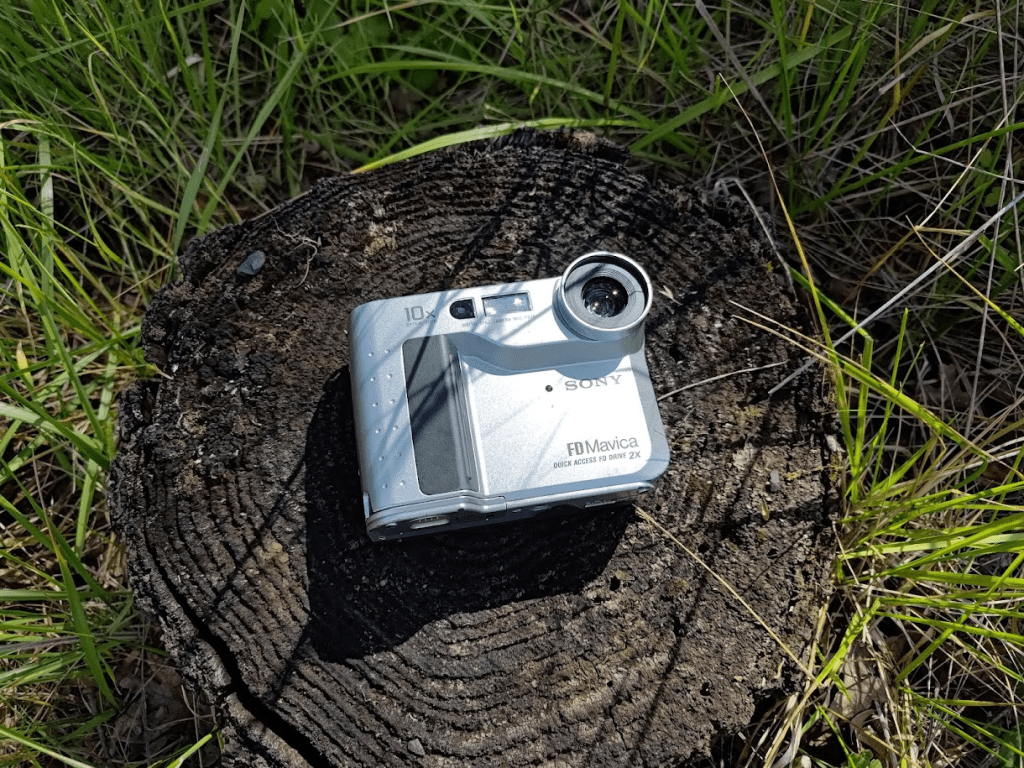
I’ve been into “vintage” digital cameras for a while (vintage meaning roughly pre-2008, at least for most electronics). This is the camera that sparked my interest in the first place: a Sony Mavica FD75 that I found for $15 at a local thrift store.
From 2001, this oddly-shaped camera is a product of the early era of digital cameras, when the much-smaller digital sensors (compared to film) meant designers could experiment with new form factors – in this case, putting the lens/sensor in the top corner of the camera body.
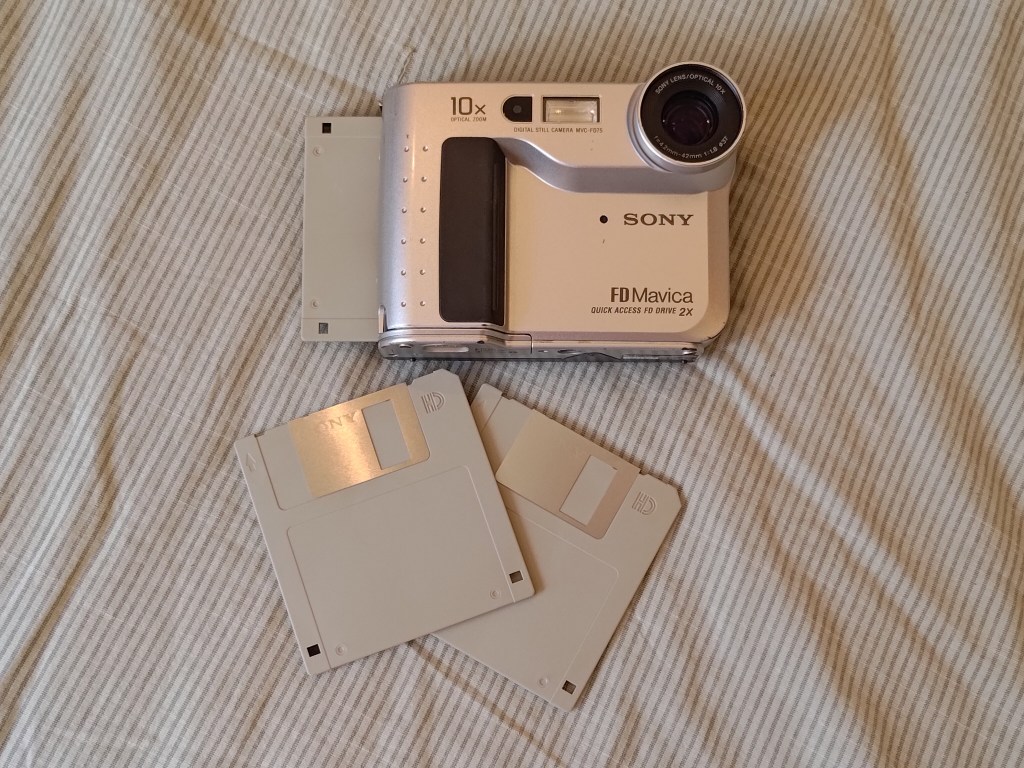
The unique thing about this camera though isn’t how it looks – it’s how it stores photos. This camera has a floppy drive built in, and it takes regular old 3.5″ floppy disks. This seems odd, but was actually a really good move for Sony. Flash memory was expensive and new, and required dedicated readers, which made the already high barrier to digital photography higher. But almost everyone had a floppy drive on their home computer, and dozens of floppy disks lying around.
Each floppy disk holds 1.44MB of data, which translates to about 17 photos in the high-quality setting, probably about 20-24 in normal quality – pretty comparable to film, which held about 24-36 shots per roll.
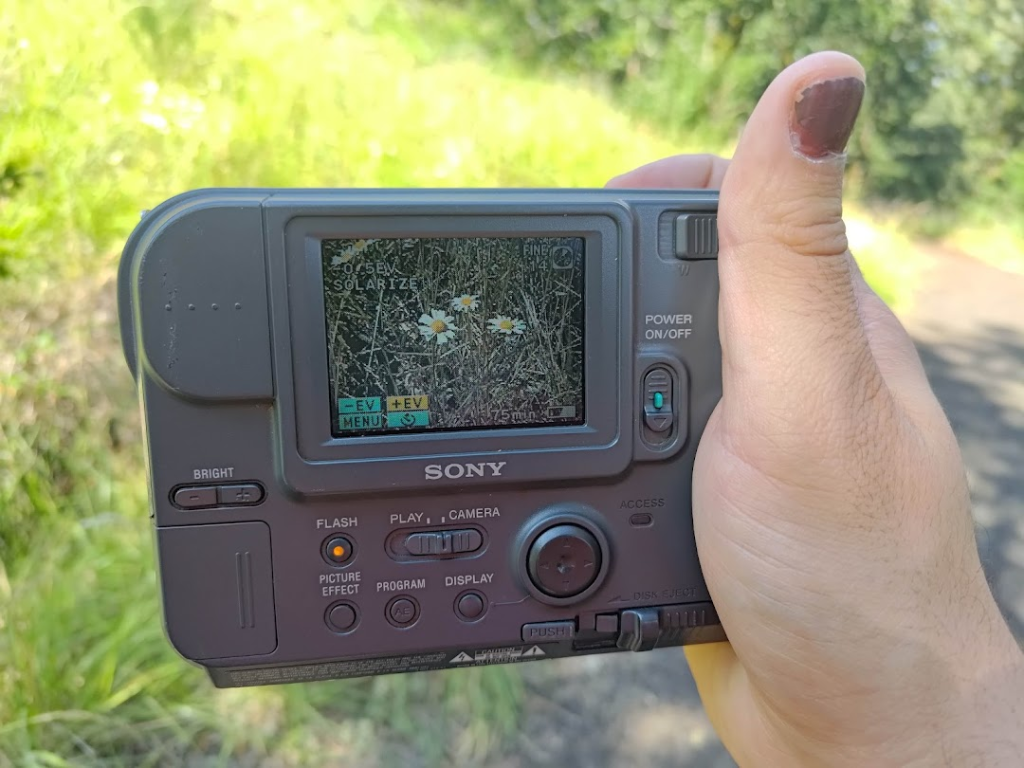
I like using this camera a lot – it has fun little sounds, lots of buttons on the back, and it feels tactile to use in a way shooting with a smartphone doesn’t. The bloops and beeps it makes (characteristic of these early 2000’s Sony cameras) makes taking pictures almost feel like a game. Each picture takes a few seconds to save, accompanied by a little animation on-screen while the internal drive grinds and clunks as it writes the data.
So – how do the photos look? Well, to cut down on cost, they used a sensor that only supports a resolution of 640×480 pixels. To be fair, that’s standard resolution, and most computer monitors’ maximum back in 2001. Nowadays though, they look pretty pixelated.
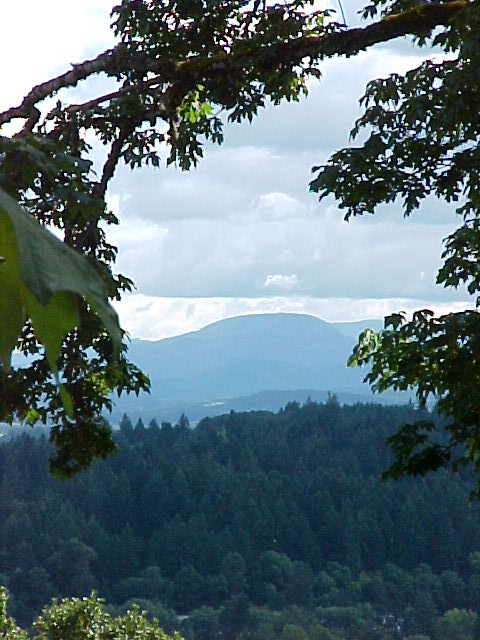
Marys Peak.
Depending on what size screen you’re looking at these on, they might actually look fine – especially if you’re viewing this page on a smartphone.
The view from Chip Ross Park.
The camera has a couple of picture modes – the photo above was taken in “Solarize” – which simplifies the color palette to fewer colors, like computers from the 80’s and early 90’s sometimes were.
Another photo taken with the solarize effect.
Despite the tiny sensor size and minimal dynamic range, I managed to get some decent photos.
The 10x optical zoom makes this camera a lot more versatile than it otherwise would be, and it’s surprisingly decent at focusing.
This photo was taken at 10x zoom. It’s hard sometimes to tell if it didn’t focus, or if the photo is just so low-quality that it’s that blurry.
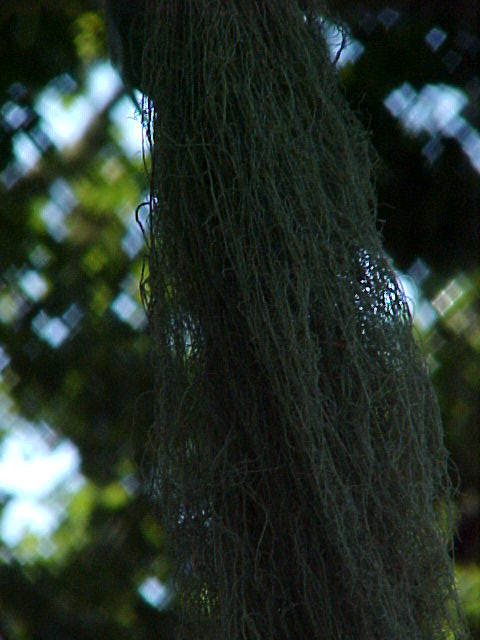
This photo shows something really interesting – notice the diamond shaped bokeh (the blurs of light in the background) – this indicates that the aperture in the lens (the hole that varies in size to let in more or less light) is a square shape (or diamond if you wish) – another cost-cutting measure. This would usually be pretty undesirable, but I really like the effect here. Portraits with this would be fun.
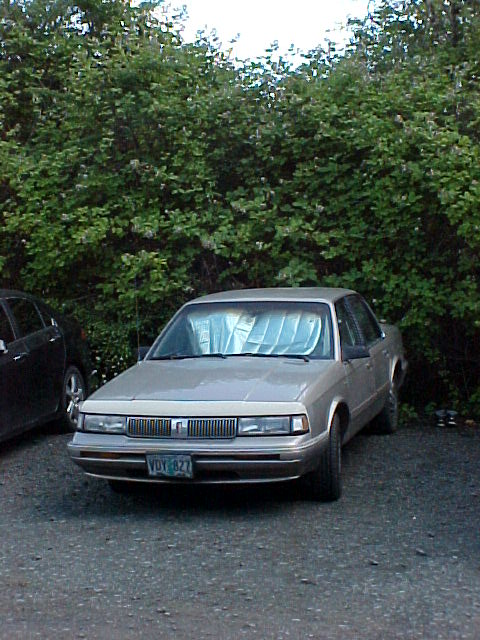
This car would have been much newer when this camera first came out.Another view of Marys Peak, the tallest peak in the Oregon Coastal Range.Despite the fuzziness, this camera actually does really well with exposure, white balance, and colors.
Believe it or not, this is actually not the worst digital camera I’ve used! That award would go to the GameBoy Camera. It isn’t even the second worst! That’s a tiny old Vivitar camera that was just awful.
Chatímanwi, or Mary’s Peak, is the tallest peak in the Oregon Coastal Range.It’s about a 45 minute drive from home, and has beautiful views and flowers in the spring.
In the middle of moving, I somehow still found time to buy another camera . . . To be fair to myself, I’ve pared my collection from about 30 to only 8 I plan to keep, so I’m doing good.
The limitations of my compact “prosumer” digital cameras (dynamic range, small sensor size) had me wanting to upgrade to a DSLR, so when I found this Nikon D200 (A high-end APS-C sensor camera from 2008), I jumped at the opportunity to snatch it, batteries, and a lens for $77.
The white spot at the upper right is lens flare – you can’t see the sun in the photo, but light from it is causing this artifact on the image.
Today I needed a break from working on moving plans. So I took the D200 out to the Mary’s River natural area, a seasonal wetland about 15 minutes from where I live.
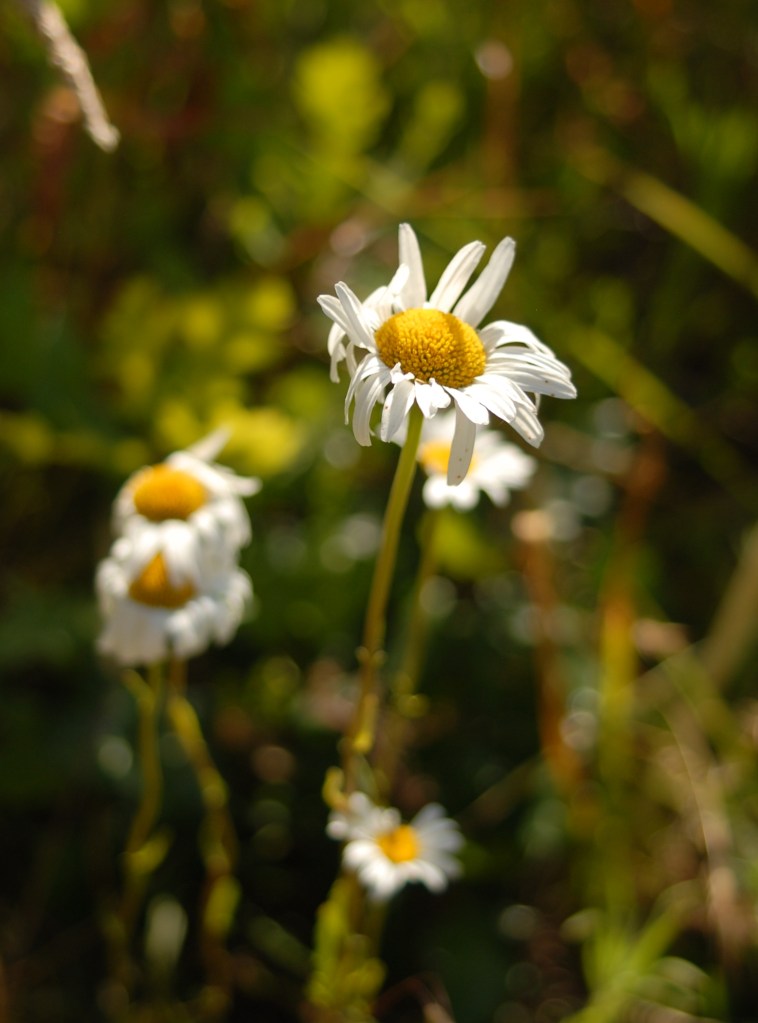
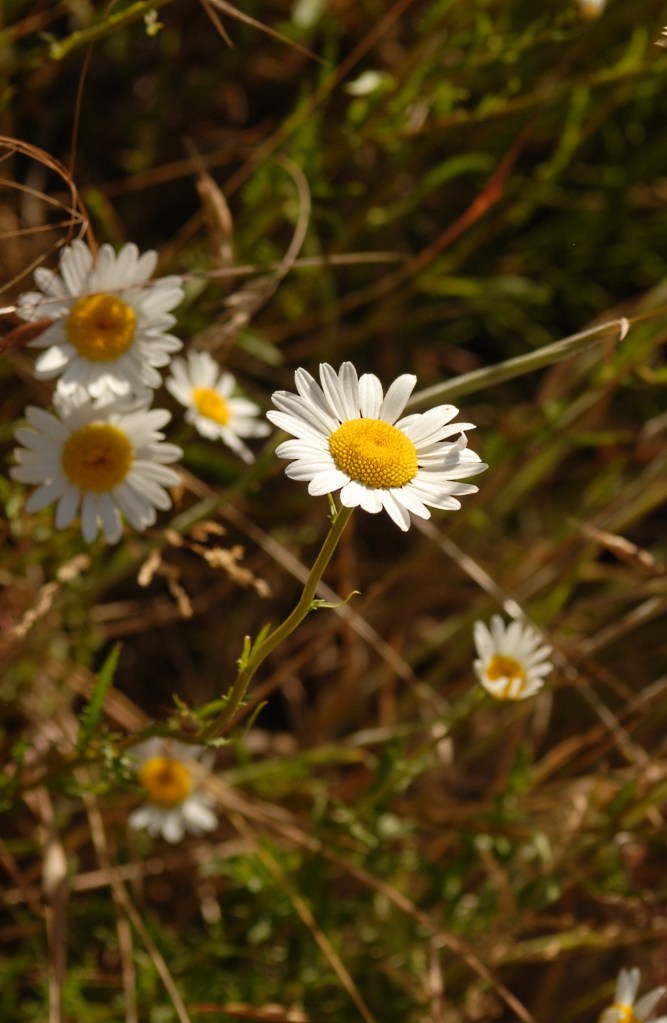
One advantage of the larger sensor (about 6x larger than my other cameras) is the bokeh–or background blur–I can achieve with it. However, I have to be more careful of focus. Here, you can see the flower isn’t totally crisp.
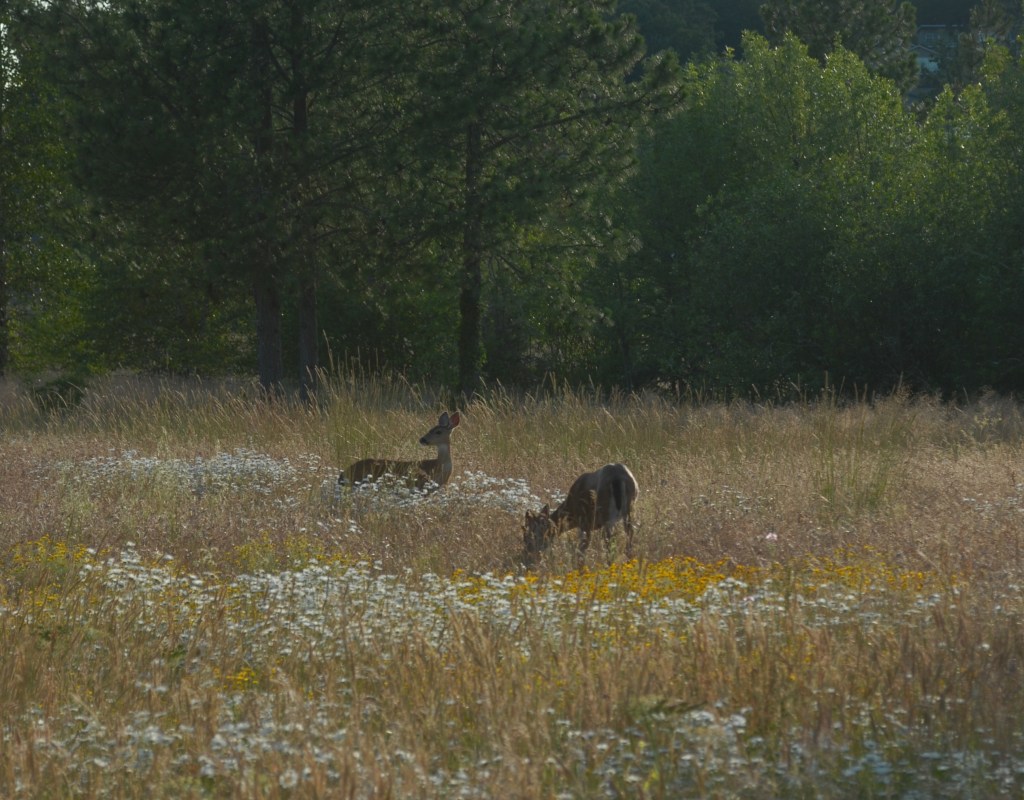
In the spring, it has a ton of flowers – now less, but I still managed to see around a dozen different types.
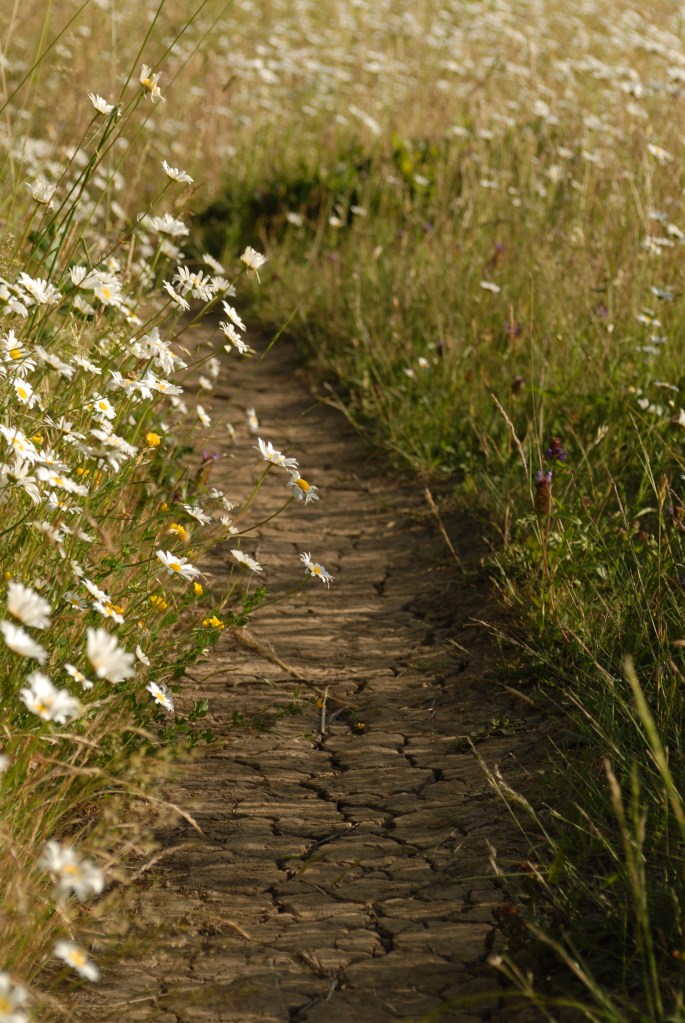
This blackberry blossom had a ton of little beetles (or weevils?) crawling among the stamen. Poison oak was also aplenty. It’s easy to spot at this early stage, because of its red, shiny new leaves.I don’t actually know if I react to it – so far, I’ve either been extraordinarily lucky, or don’t react to its oil.Another bug! Notice the sunspots right above the bug – the flat sides are due to the physical shape of the opening in the camera lens. Some people don’t like this effect – I do.A weevil friend! You can tell due to its distinct “snoot” and antenna attached halfway up the snoot.For this photo, to get everything sharp, I had to use a smaller aperture (the hole in the lens that lets light through) – the smaller the hole, the deeper the area in focus is. The larger the hole, the less deep the area of focus is. Most of the photos above used the largest opening size in the lens. There were SO MANY DAISIES. I really wanted to pick a bouquet, but didn’t want to carry it (in addition to my camera and bag) all the way back. Wasps are pollinators too, but I still prefer honeybees 😛
One nice thing about this camera (and its 10MP sensor) is that – as long as the image is in focus enough – I can crop quite a bit. The wasp image above was about 8x larger than what you’re seeing, but due to the higher resolution of the sensor, I can crop in to just what I care about afterwards.
This old car is hanging halfway over the edge of the river bank, supported by several trees grown through it. It might be a Fiat 850 or something close, but I can’t tell for sure.I love the colors and very soft grain of this photo.More daisies . . . …Woah, not a daisy!This might be my favorite photo of this whole walk. These flowers are beautiful, and the bokeh, lighting, and colors are fantastic.I’m not sure what bird this was.Two bugs sharing a daisy!Delightfully evil looking plant.This bumblebee was a happy accident – I was snapping photos of something else and heard a buzzing near my ear!The 2015 Chevrolet Volt isn’t the sleekest of cars, but I like mine.
All for now!
All images in this post can be used under the terms of the CC-BY 4.0 license. No other images on this site may be used under this license unless otherwise noted.
I woke up early for my interview (for real this time), which went well!
Then I headed back to the guesthouse to drop my luggage off after checking out of the hotel. I wasn’t allowed to hang out at the guesthouse till after 5PM, so I headed back out to Akihabara, the “Electric City” district. I’d already been, but I wanted to do more exploring, and potentially buy a piece of retro technology for myself.
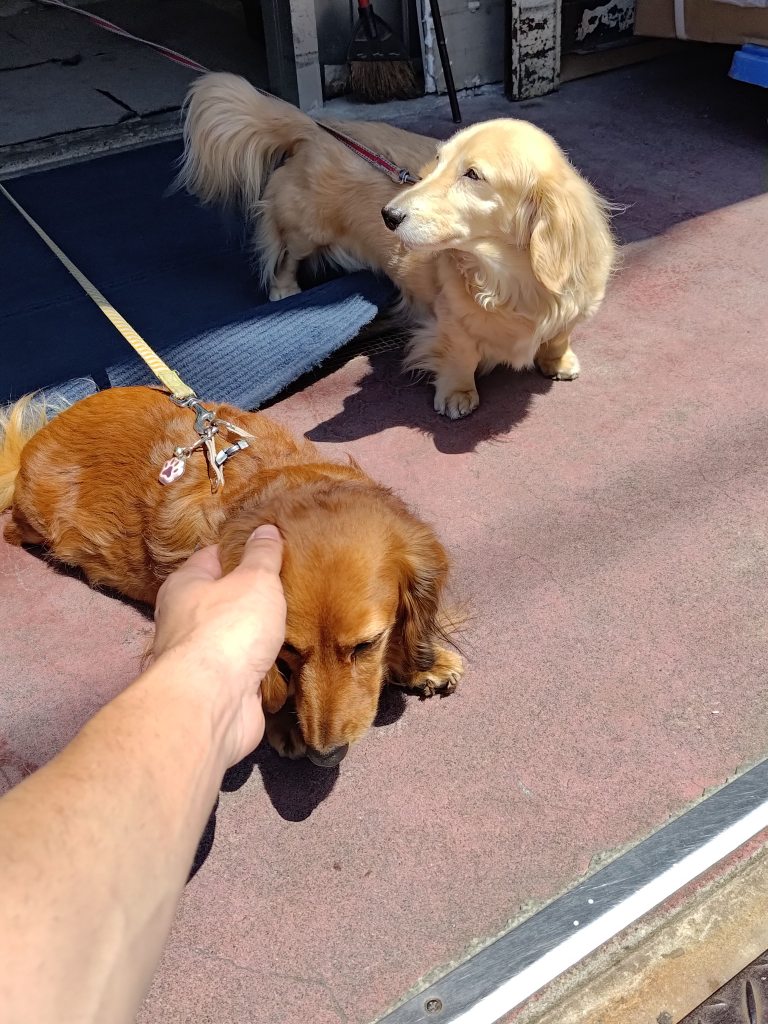
On the way to the subway station, I saw two little dogs sitting out in the sun in front of a shop. Seeing me grin and stop to take out my phone for a photo, the Japanese lady who ran the shop waved me over, so I stooped to pet them.
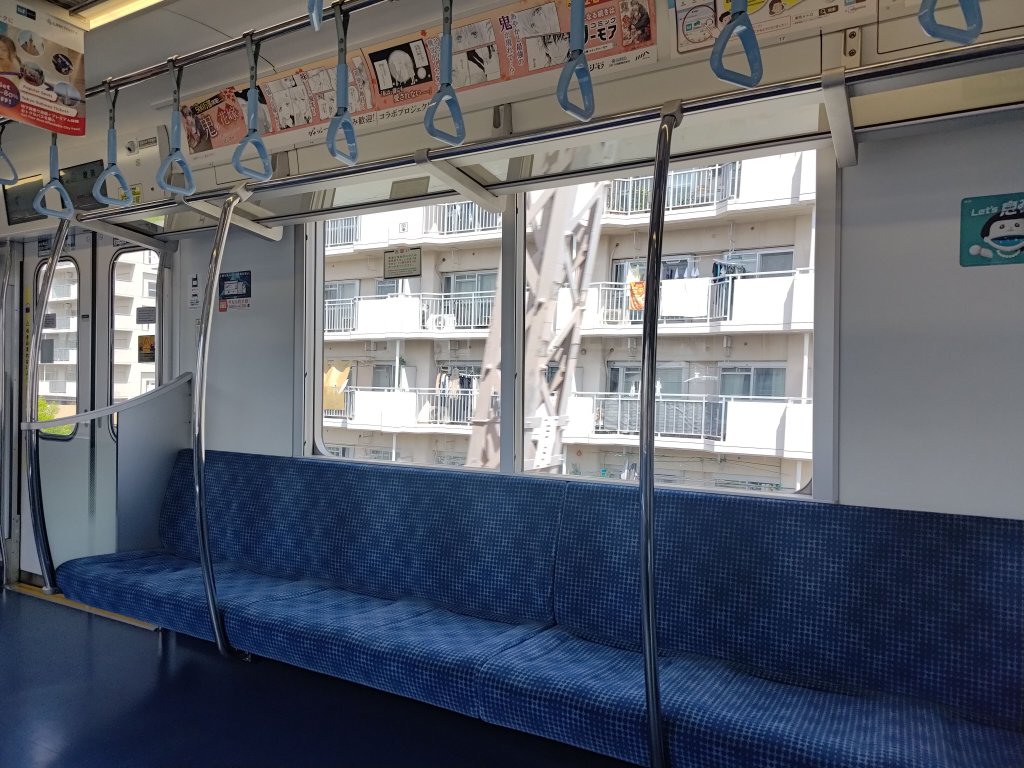
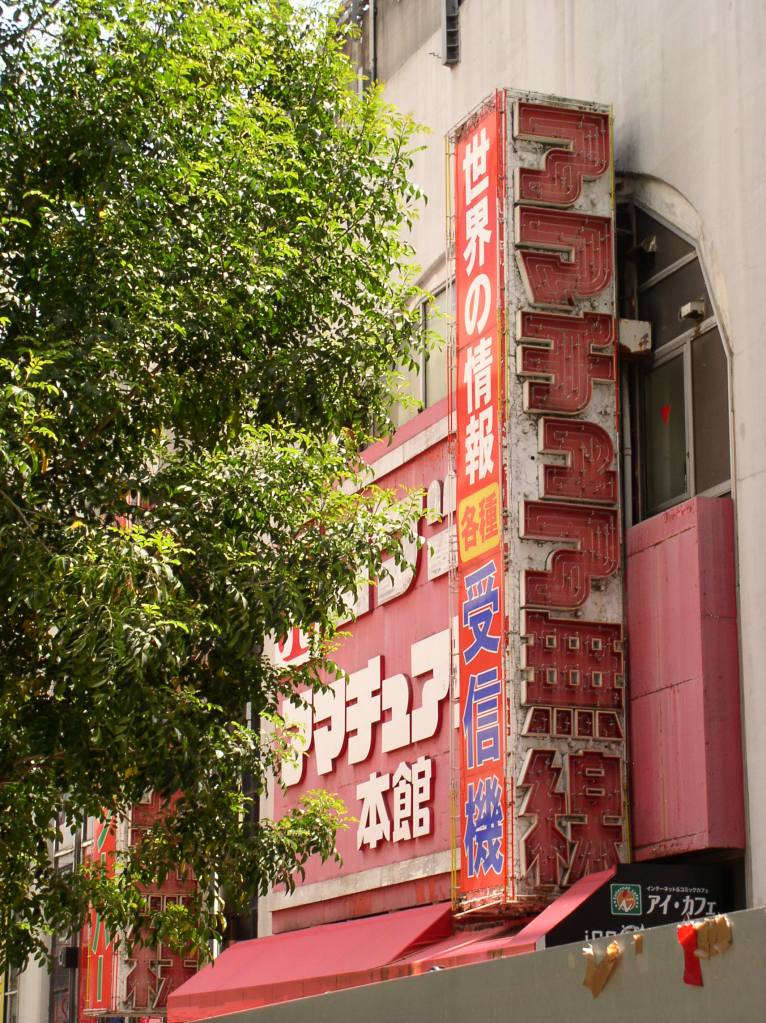
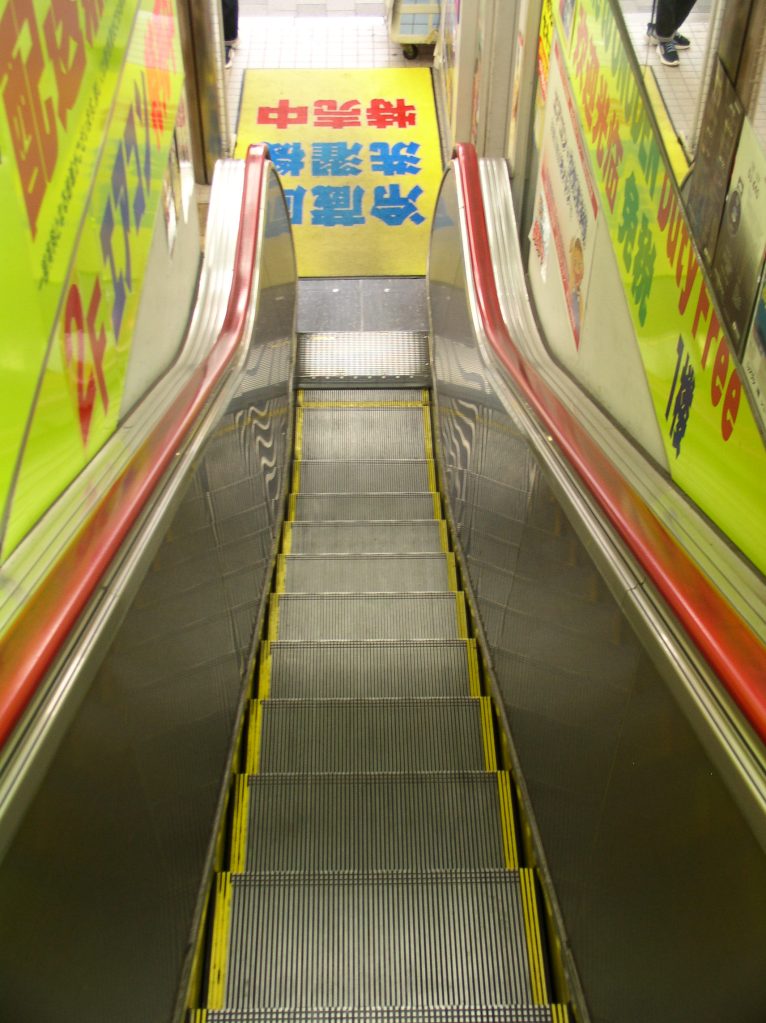
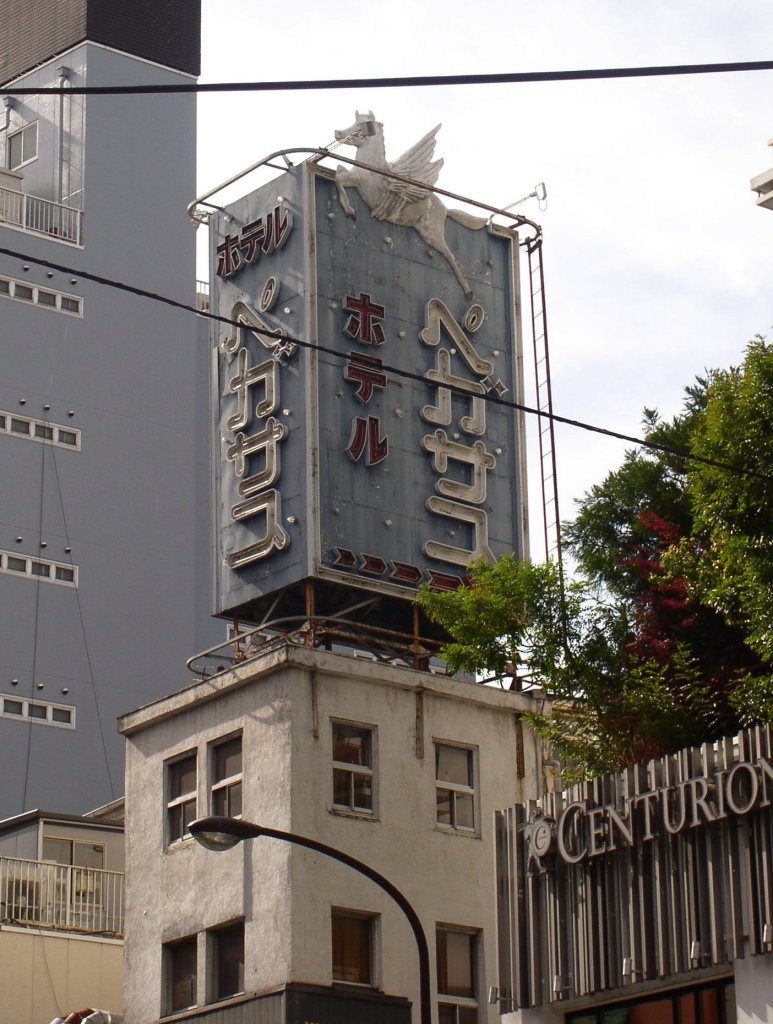
They were so soft!The subway was actually quite empty at this time of day! Normally there are so many people around that I don’t feel comfortable taking photos.There are a lot of really cool old neon signs in Akihabara, which I imagine would look awesome at night.
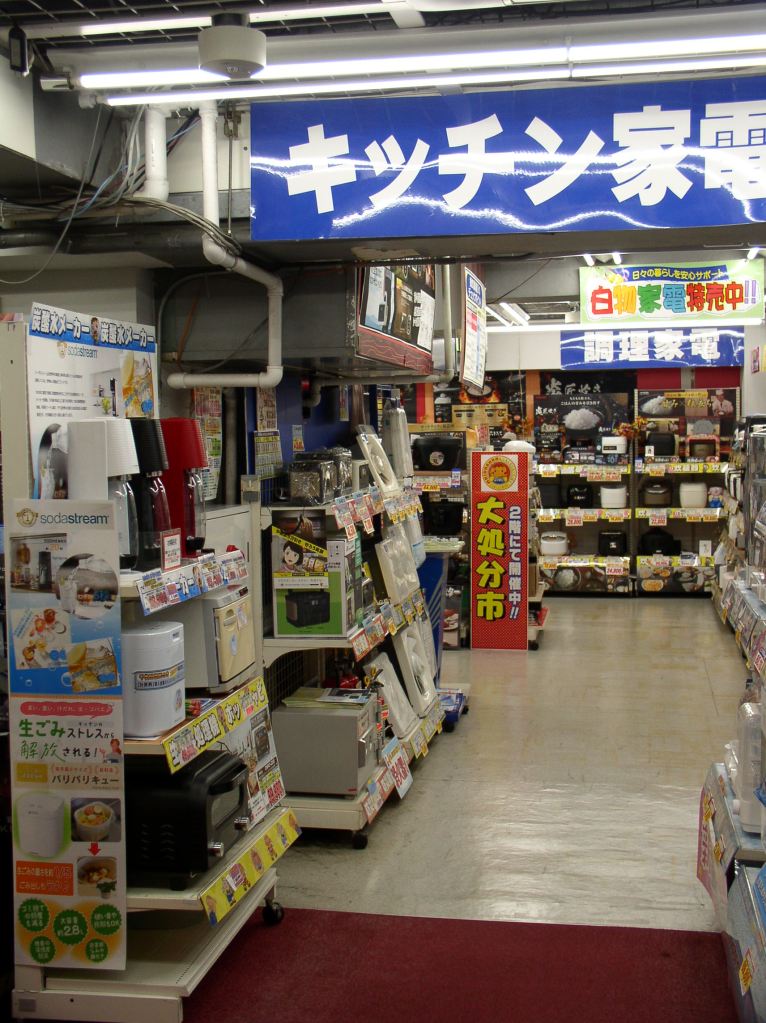
After getting to Akihabara, I explored another set of electronics department stores I hadn’t gone into yet.
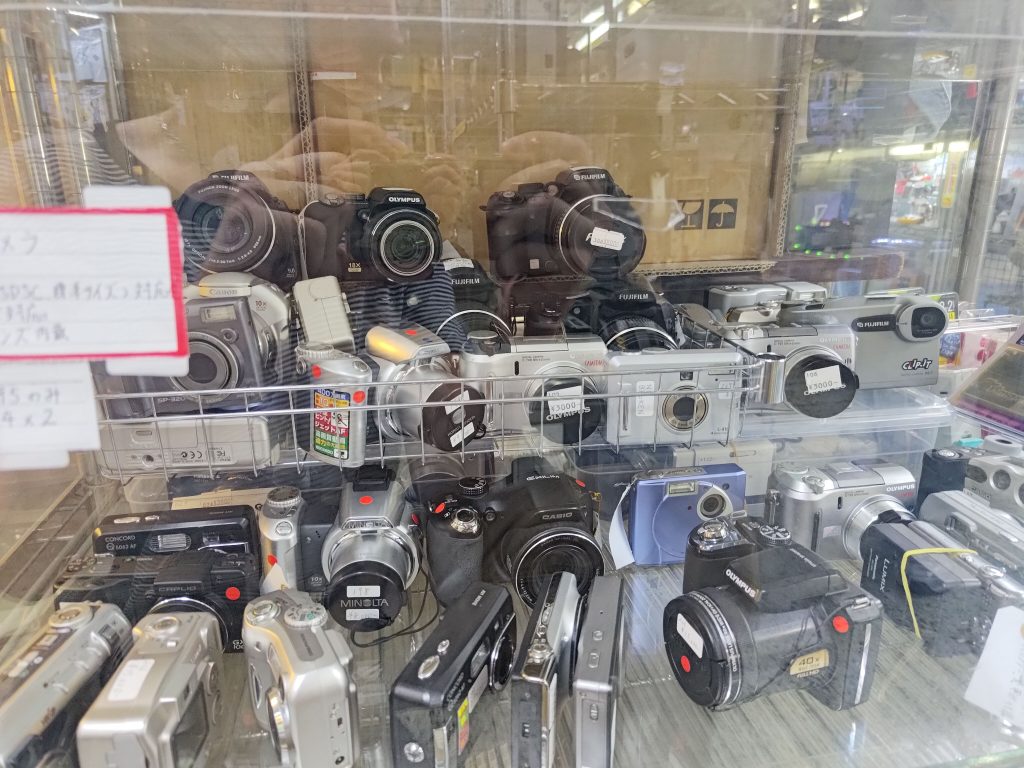
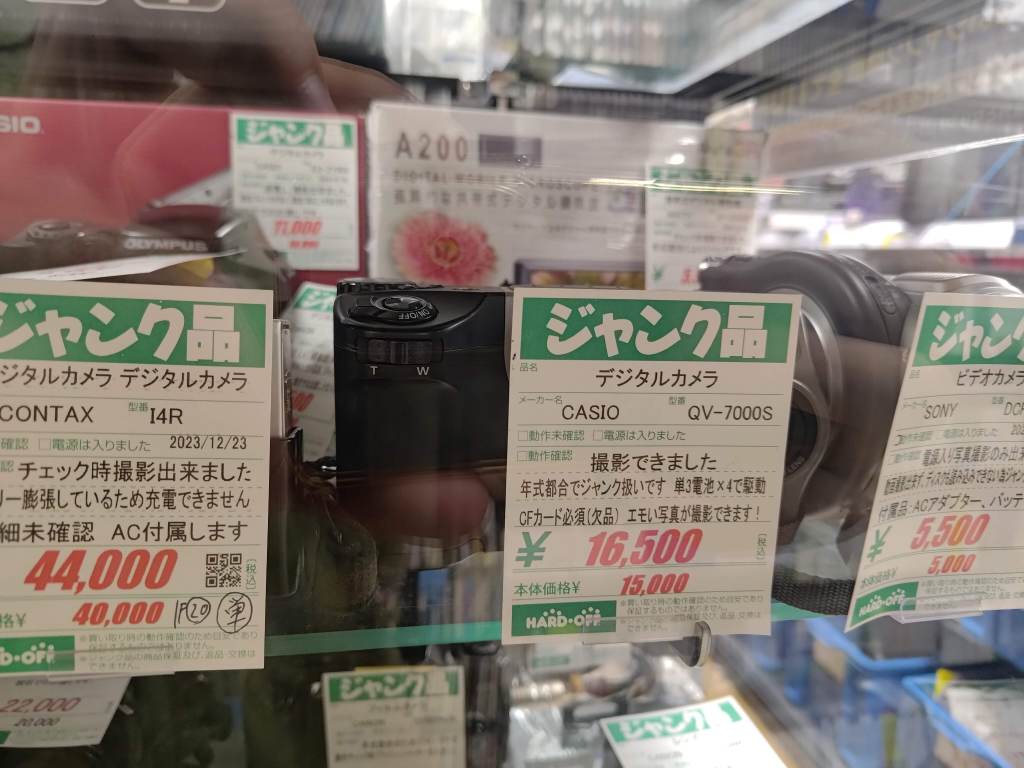
I did find a shop with a bunch of older digital and analog cameras, and was very tempted to get some – but most weren’t that interesting (or were overpriced).
I did find the same model as the camera I’d originally brought that stopped working (momentarily)! But it was like $65, which is far more than I want to pay.
It is in muuuch nicer condition than mine is though…Of course, there were Nintendo consoles also.
I didn’t end up buying anything – it turns out some of the shops I was thinking of buying from were closed (It’s Golden Week here in Japan – the longest vacation most Japanese people get, so a lot of places are closed while the owners take vacation). That was better anyway – I wasn’t super excited about anything I saw, and I’m headed to a flea market on Saturday, so need some spending cash for that.
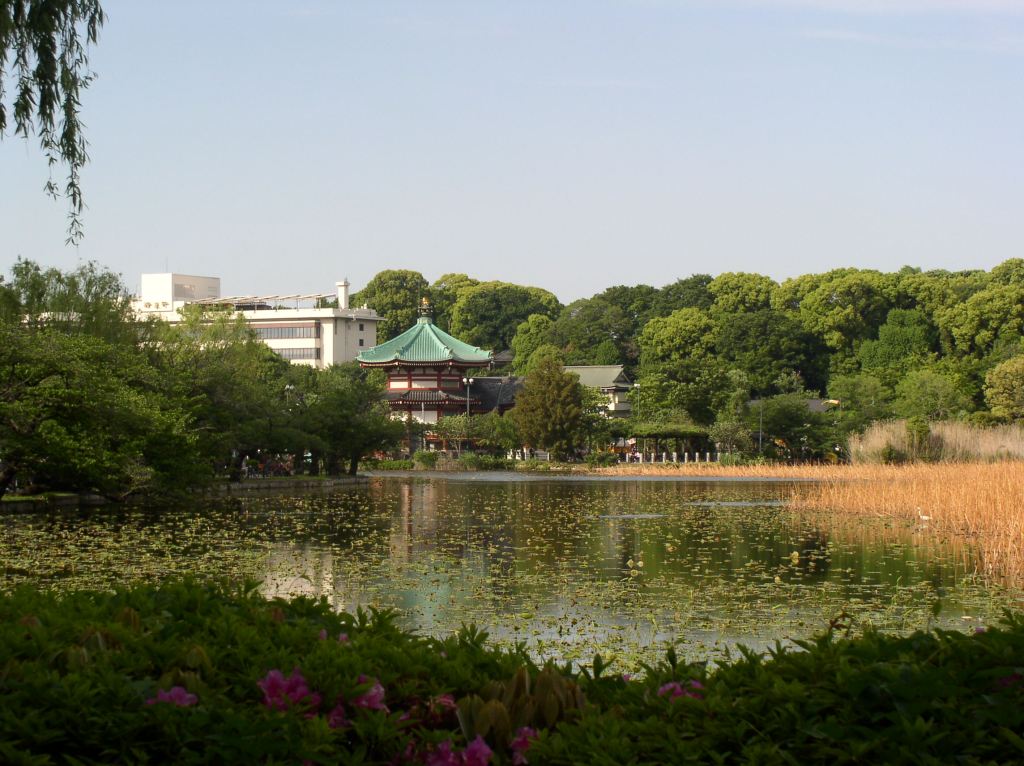
Next I headed to Ueno Park, a large park in the middle of the Ueno district in Tokyo. In the middle of the park is an old Buddhist temple, but it’s surrounded by ponds and other greenery.
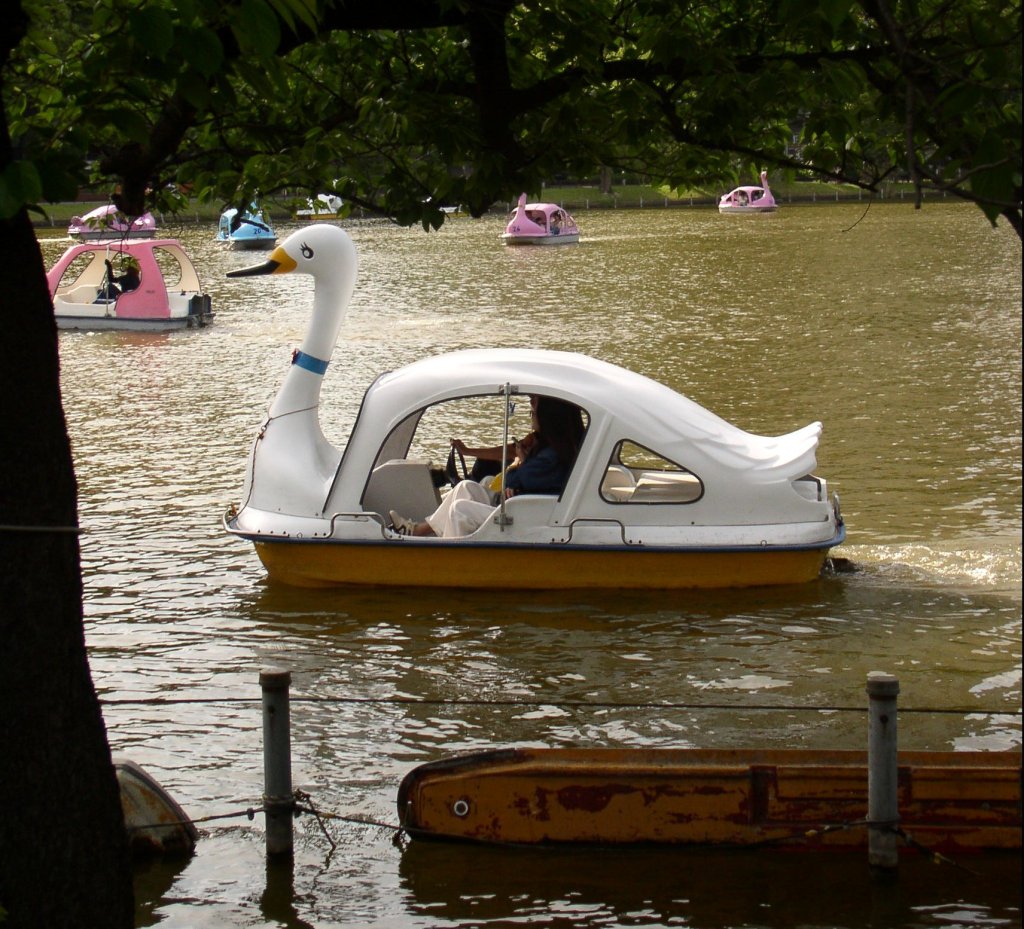
DUCK BOATS! I told myself that if they were less than 1000 yen, I’d get one…
The duck boats were 800 yen (for a swan one), 700 yen for a basic covered boat, and 500 for a rowboat, all for 30 minutes. So I got a covered boat!
OLYMPUS C4100
My legs did not fit in the boat well, but I managed regardless to make a decent loop around the lake. It was fun, though would have been a little easier with another person (and shorter legs).
OLYMPUS C4100
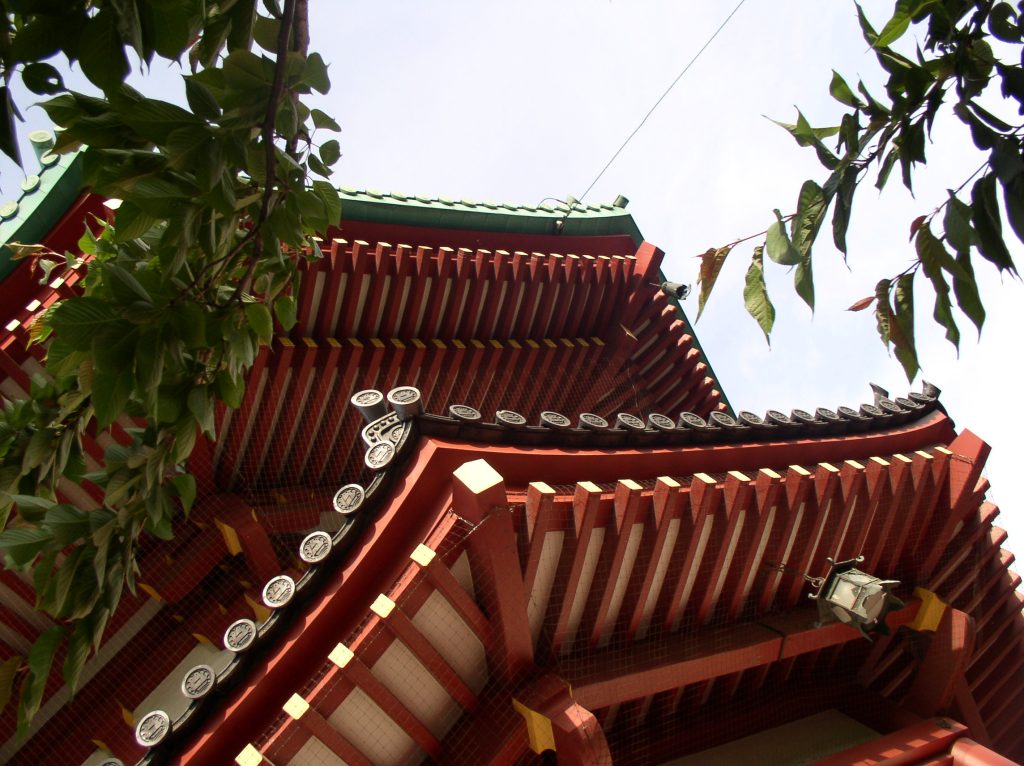
After this, I walked over to the Buddhist temple, and explored around it a bit.
OLYMPUS C4100
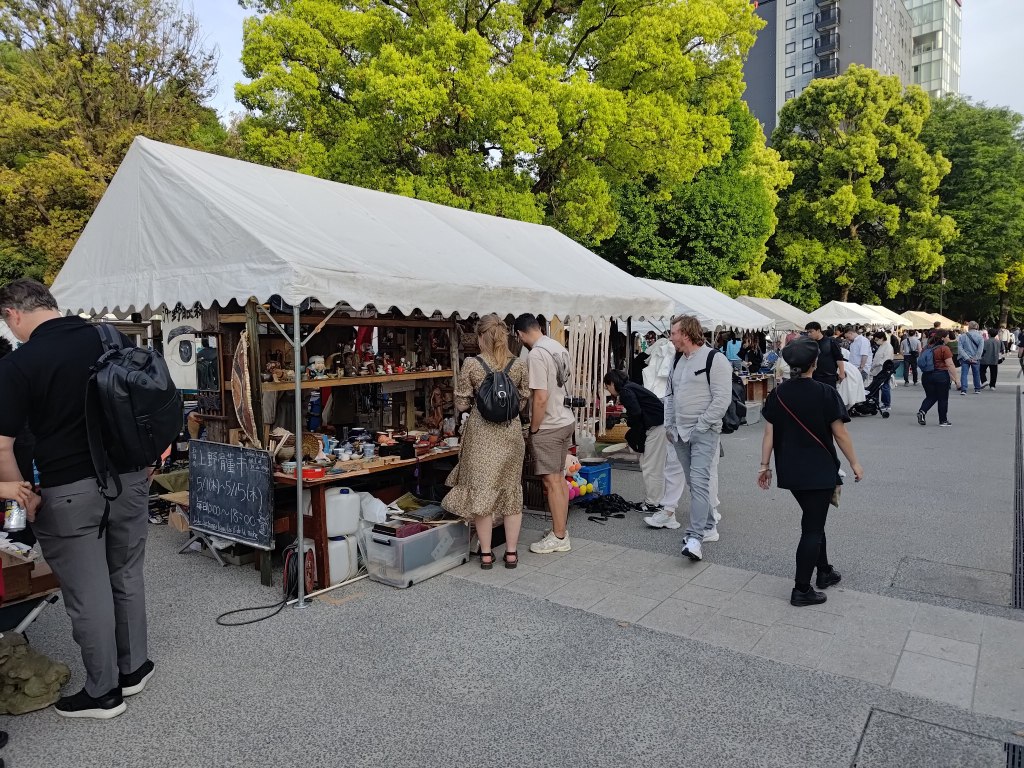
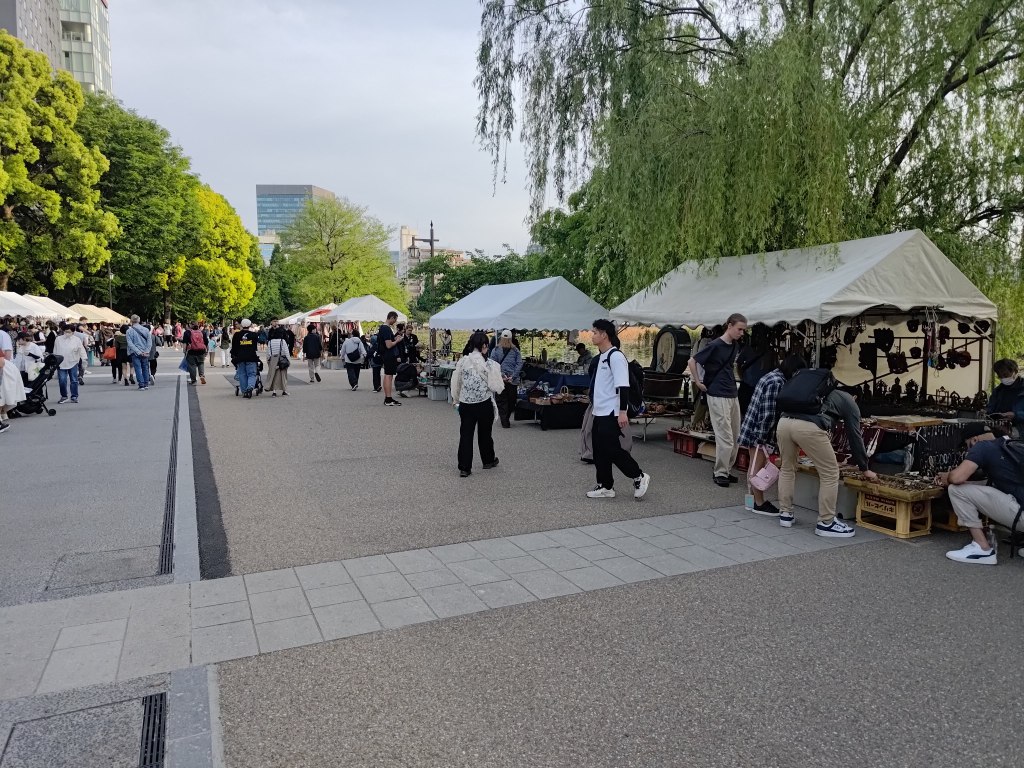
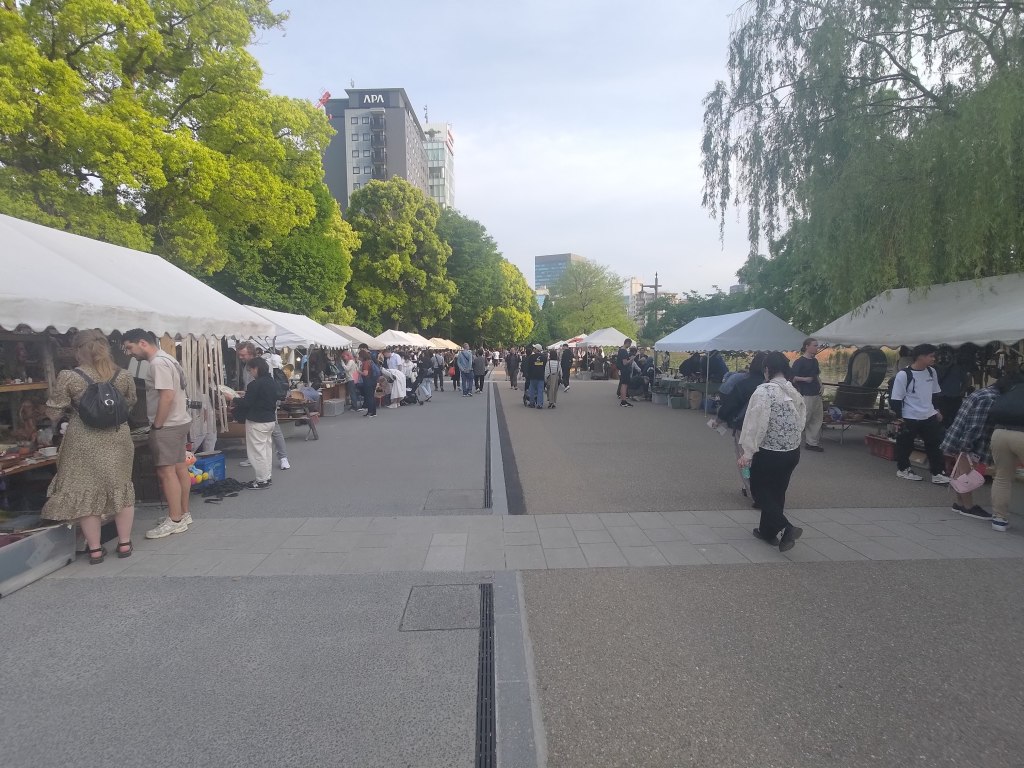
After this, I headed across another bridge across the pond and stumbled upon a small flea market. And I found a lot of cool things!
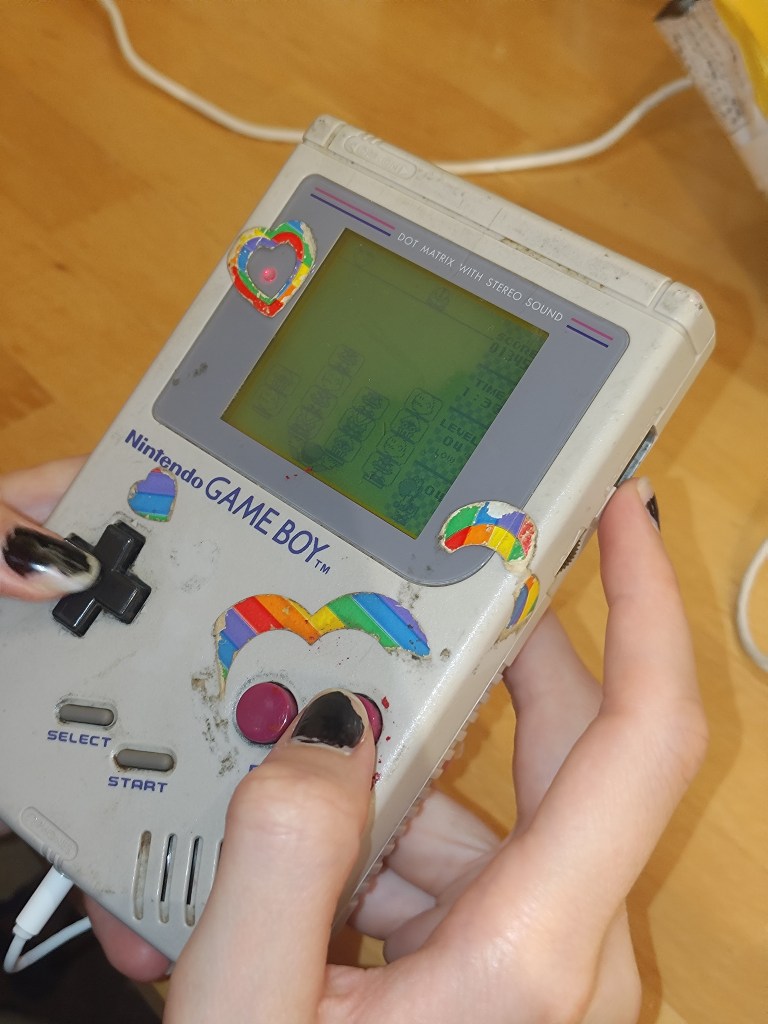
An Original Gameboy for 800 yen (About $5.60)
A Gameboy camera for 500 yen ($3.50)
A Japanese Yoshi game for 500 yen (Still $3.50)
A cute ceramic cup for Mo for 300 yen ($2.10)
A pair of vintage sunglasses that I’m hoping don’t make me look too much like a serial killer for 2000 yen ($14)
A brass whistle with a Nissan label on it (gonna carry it on my keychain to get people’s attention if needed – another guy tested it for 500 yen (STILL $3.50!)
I’d forgotten how difficult the Gameboy’s screen is to see, let alone photograph. Anyway, trust that the photos from the Gameboy camera look a little better in real life. Only a little. Unfortunately, immediately after getting the Gameboy to turn on and boot the Yoshi game I had to relinquish control to Izara, one of the other guesthouse guests, who has become very invested in the game. The sound doesn’t work, but if you plug in a pair of headphones it does.
On my way back to the subway station, I snapped a few more photos in the sunset glow.
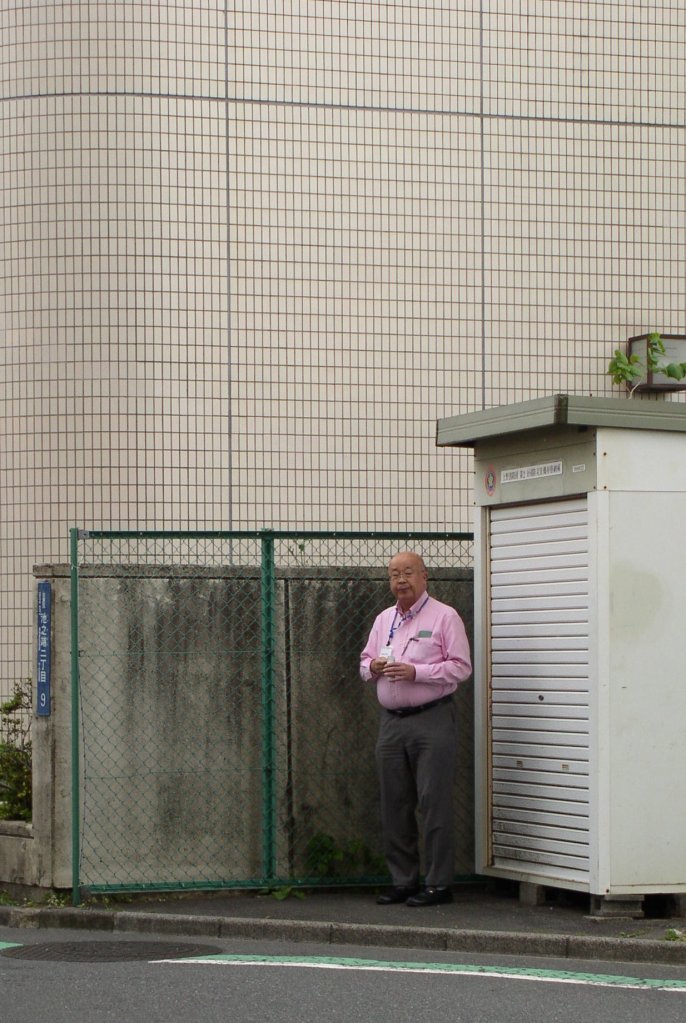
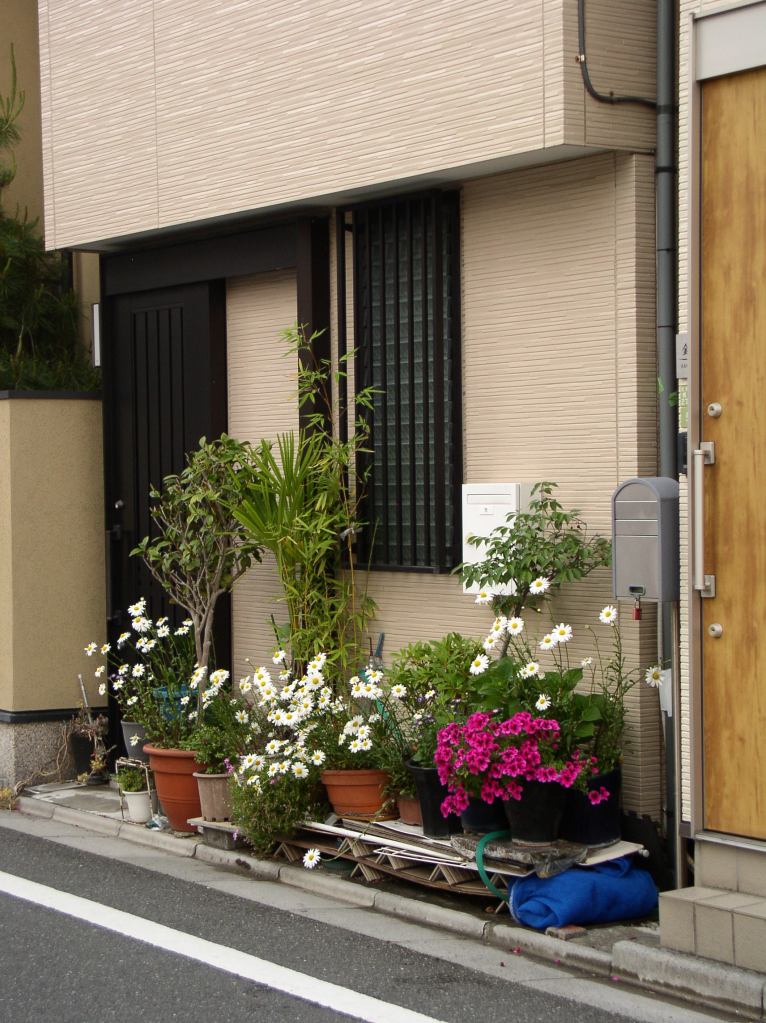
OLYMPUS C4100I tried drawing this flower later in the evening. There is a reason I have not posted the drawing.A majestic tree and gateAn older metro car that was sitting in the neighborhood I walked through.This kindly-looking old man was taking a smoke break when I walked by. The streetcar above was behind him and I tried to sneak a photo of him, but it looks like he noticed (and didn’t mind)Little planters of flowers outside people’s houses are really common here, which is really cute!A lot of Honda Supercub mopeds around! I’m pretty sure driving a Moped would be illegal for me here, but I also haven’t seen any places to rent them.
After this, I hung out in the common area and shared my finds with the other guests. I also got sushi at a conveyor belt place down the road, but forgot to take photos.
Finally a breakfast picture! I had the presence of mind to take a photo before I started eating.
After breakfast and some blogging, I headed out with Matt, one of the other people at the hostel – we were heading in the same direction towards Toyko, he to get a haircut and I to visit Akihabara, Toyko’s “Electric City” – known for (among other things), a lot of electronics shops. Perfect for me!
First though, I needed a Suica card – the trains in Toyko (and I believe, much of Japan) are paid for via “IC Cards”. You can technically buy individual tickets, but the system isn’t well set up for them. I know this because on my way from the camera shops to the hostel, after about 25 minutes of careful studying of multiple guides on her PDF and consulting another coworker, the lady at the ticket counter finally printed one out, and then hand wrote kanji on it, added an official stamp, and sent me on my way.
None of the ticket machines would take the modified ticket, so each station I had to go to the information booth to ask to be let through.
Anyway, the first thing we did was stop by an ATM (I withdrew 10,000 Yen, about USD $70 – cash is very commonly used here, and card isn’t universally accepted), then went to a ticket machine to get my very own Suica IC card, preloaded with 1,500 Yen.
I like the little penguin. Other cards have other designs.
After 30 or so minutes on the subway into the heart of Tokyo, I hopped off at Akihabara station and started exploring.
It’s amazing how much they have for sale here! You can buy new and used phones, ranging from $15 for very old phones in untested condition like the ones in the bins below, to new or refurbished iPhones and other high end brands.
OLYMPUS DIGITAL CAMERA
If you wanted to buy a computer, it would be easy – dozens of shops with new and used laptops and desktops, plus any accessory you could need.
This TINY laptop was 14,000 Yen, about $90. Despite its size, it would work fine for light computing, and the fact that it would fit in my side bag is tempting…
Better yet, if you wanted to build a computer, everything you need, new and used, is available with in a few minutes’ walk. From low-end web browsing PCs to high end gaming machines, everything is here.
I found this vintage macbook too! After I finished looking at it, I realized the bin it had been in had a “do not touch” sticker on it (that, to be fair, had fallen off). Oops.
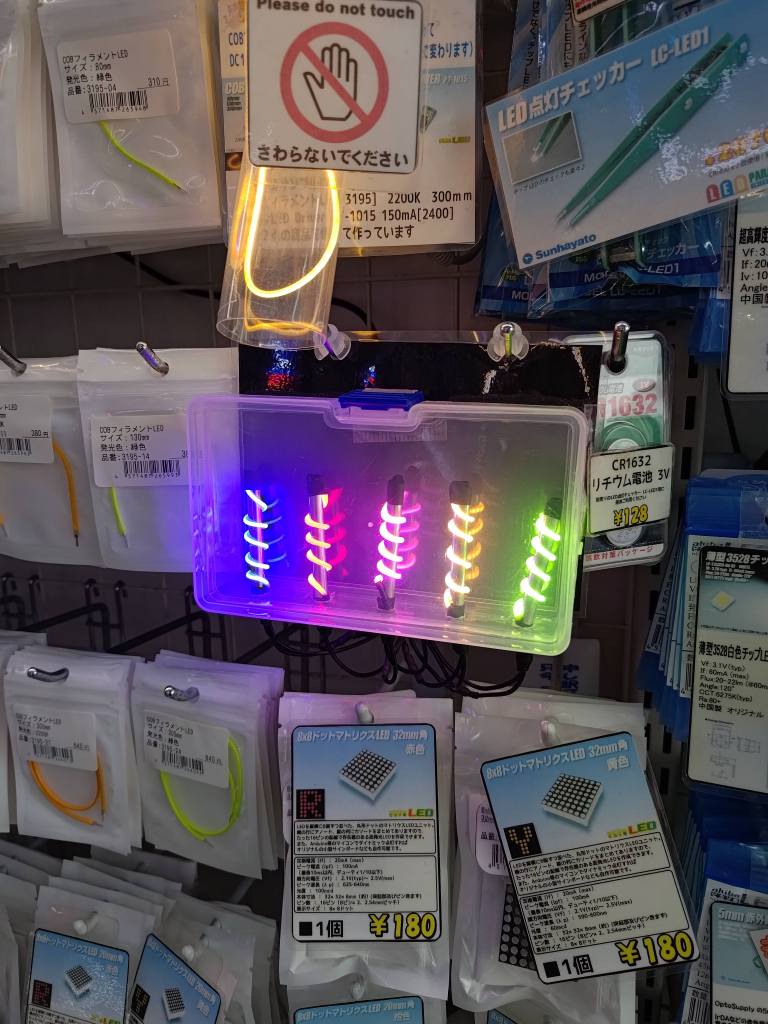
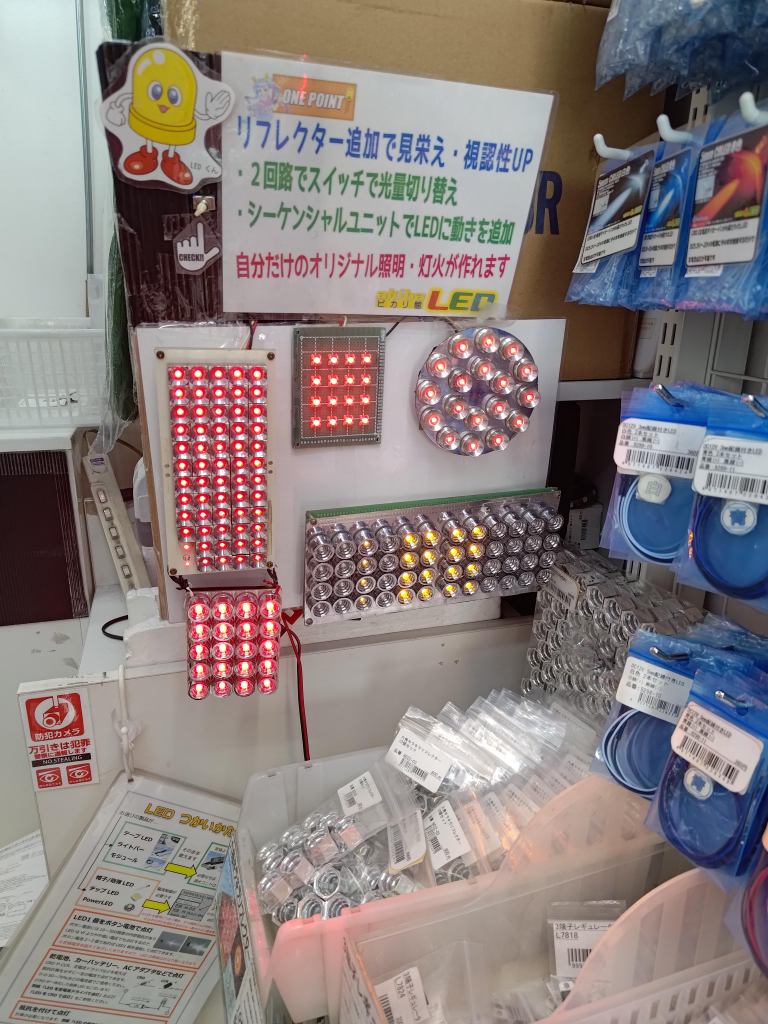
There are also tons of little stands with a wide variety of little electronic components. Some of these take up only a hundred or so square feet, and are run by an older Japanese man. It surprises me (pleasantly) that it’s possible for these people to have their own little business – in a world where most electronics are now bought online, it’s really cool to see these little shops still around. I have heard that they are becoming less and less common.
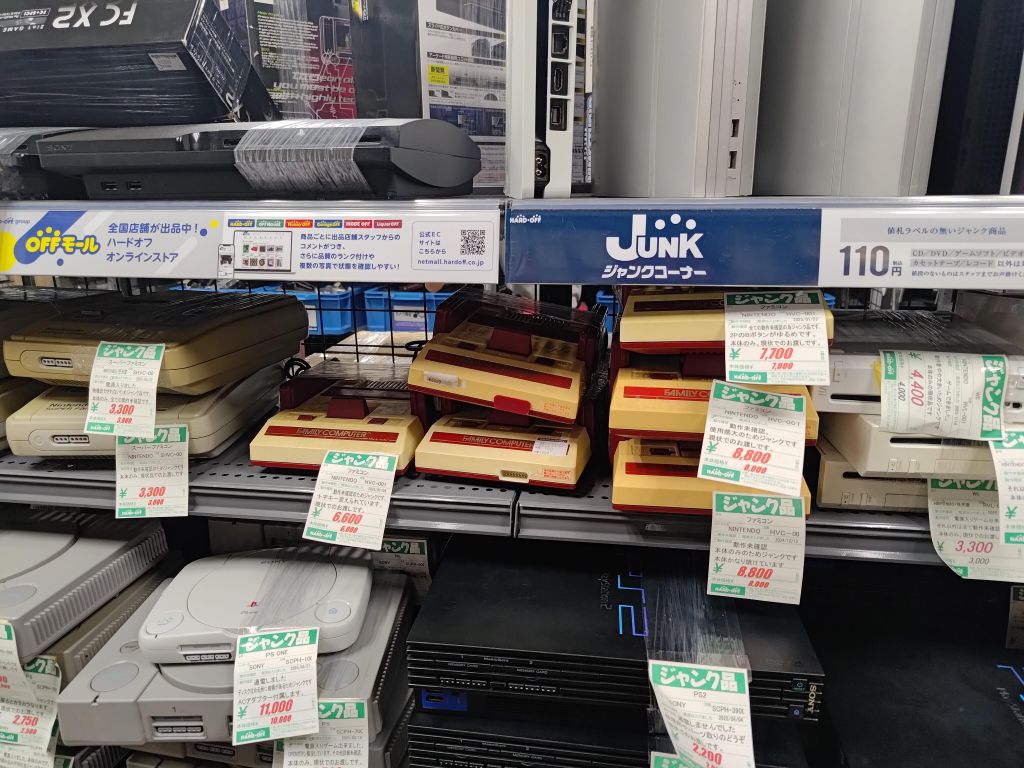
I also checked out a couple of thrift stores – the ones I went to mostly focused on electronics and musical instruments. Both stores were split across multiple levels – the nicer things on the upper levels, but in the basement, the “Junk” – less valuable, possibly non-working things for lower prices. I very much enjoyed digging through these bins.
There were also a ton of vintage game consoles, especially Nintendo. It makes sense – Nintendo is a Japanese company, and their first consoles were originally released in Japan. The yellow/red consoles are the original Japanese version of the NES.
Some of these are only $15-20 USD! I’m tempted to get one, but the cartridges between the Family Computer and NES aren’t compatible – though maybe a minor case modification would solve this… You can’t see it behind the price tag, but this camera is a pretty unique digital camera from 1998 – very early for digital cameras! However, the price ($115 USD!) is ridiculous.
In my quest to find vintage computer gear, I visited a bunch of retro gaming shops, and found even more consoles, and thousands of games.
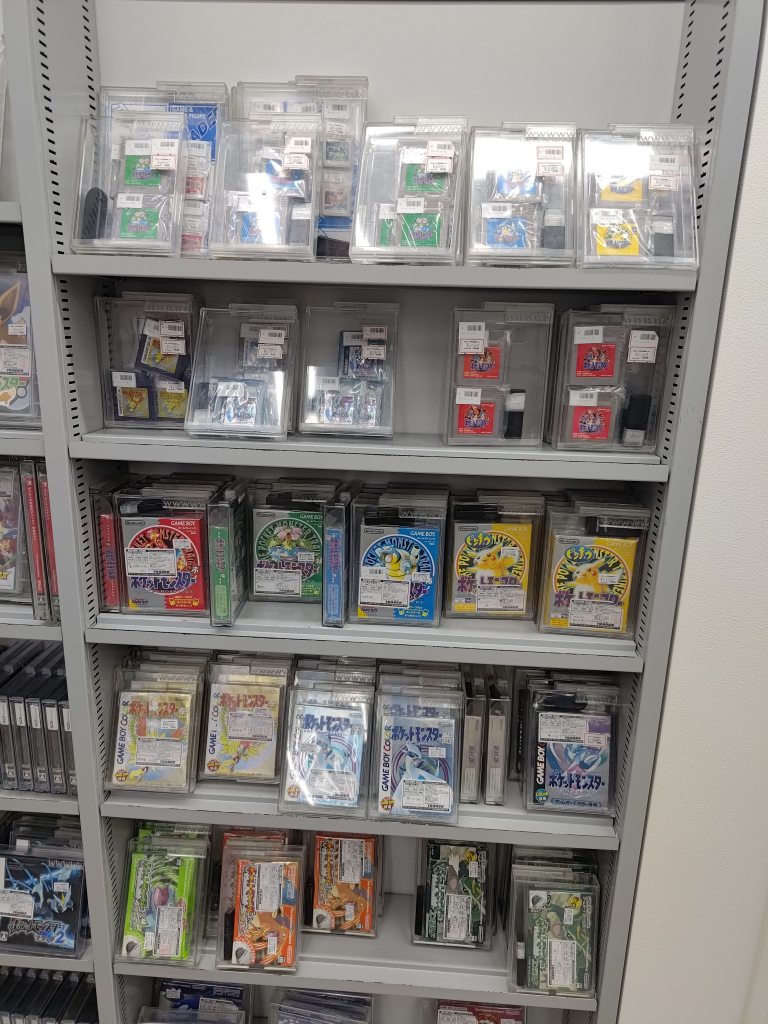
There were games in bins like these, but most of the more popular games were in individual plastic packaging and hanging on pegs. The Super Famicon was the next generation of console after the Nintendo Family Computer, but was still pretty similar. Anime / Manga is a big part of the culture here too – lots of the game shops also had that sort of thing yet. The original “Pocket Monsters” Pokemon games.Two pieces of very cool tech – the robot companion for the Nintendo Family Computer, and a very old retro gaming computer with a vertical aspect ratio. There were also a lot of consoles I’d never heard of before, like this one, the “PC Engine”. Apparently there is a floppy disk drive add-on for the original Family Computer – it was used for saving games, even as an alternative for game cartridges, and apparently for additional higher quality soundtracks on games.
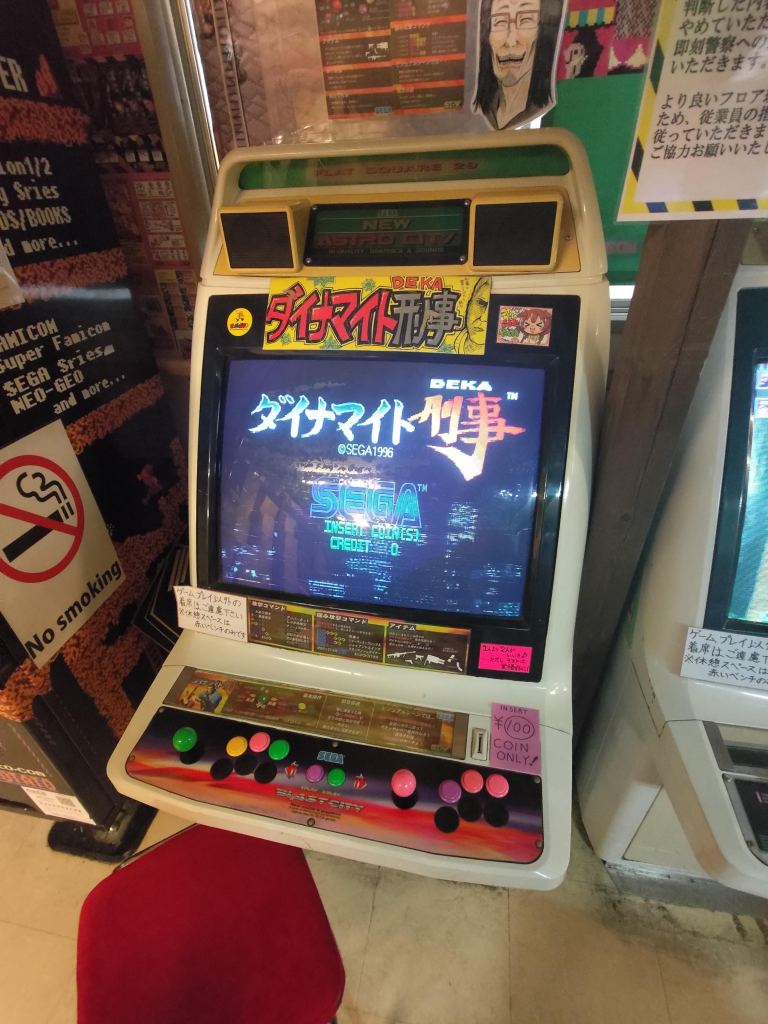
Many larger stores here are broken across several floors in a narrow 5-7 story building. In the top floor of one of the vintage game stores was an arcade with a bunch of old arcade machines and a bunch of snacks for sale.
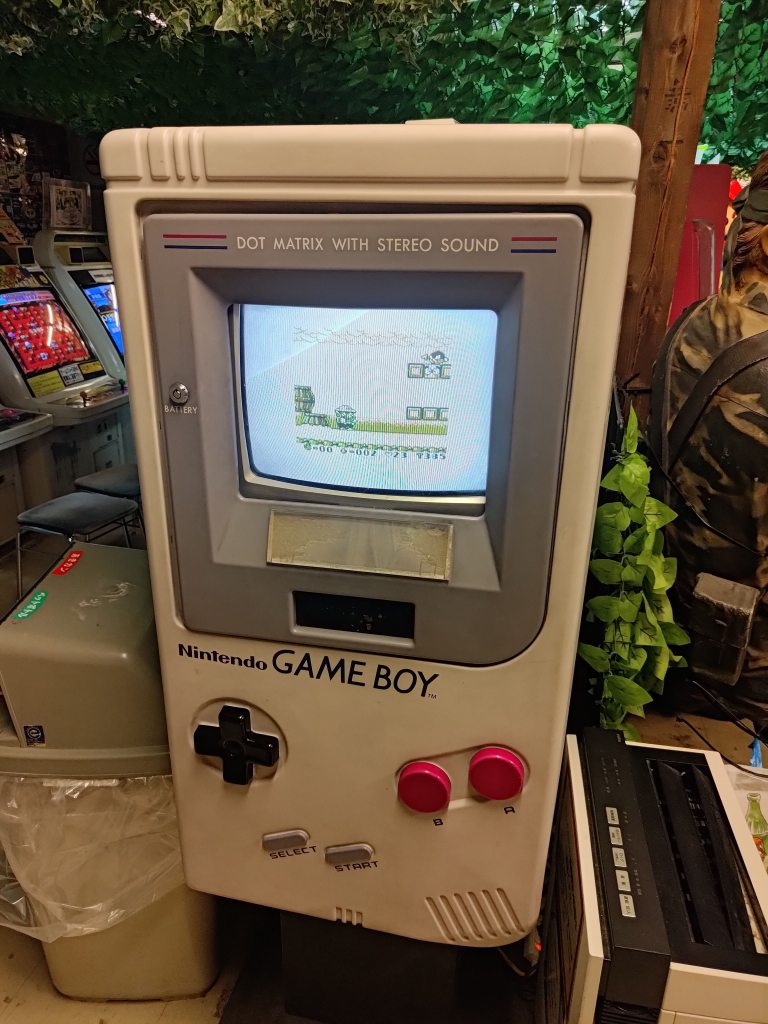
One of these had english voice acting. This supersized gameboy didn’t seem to be playable. I wonder what it was supposed to do?
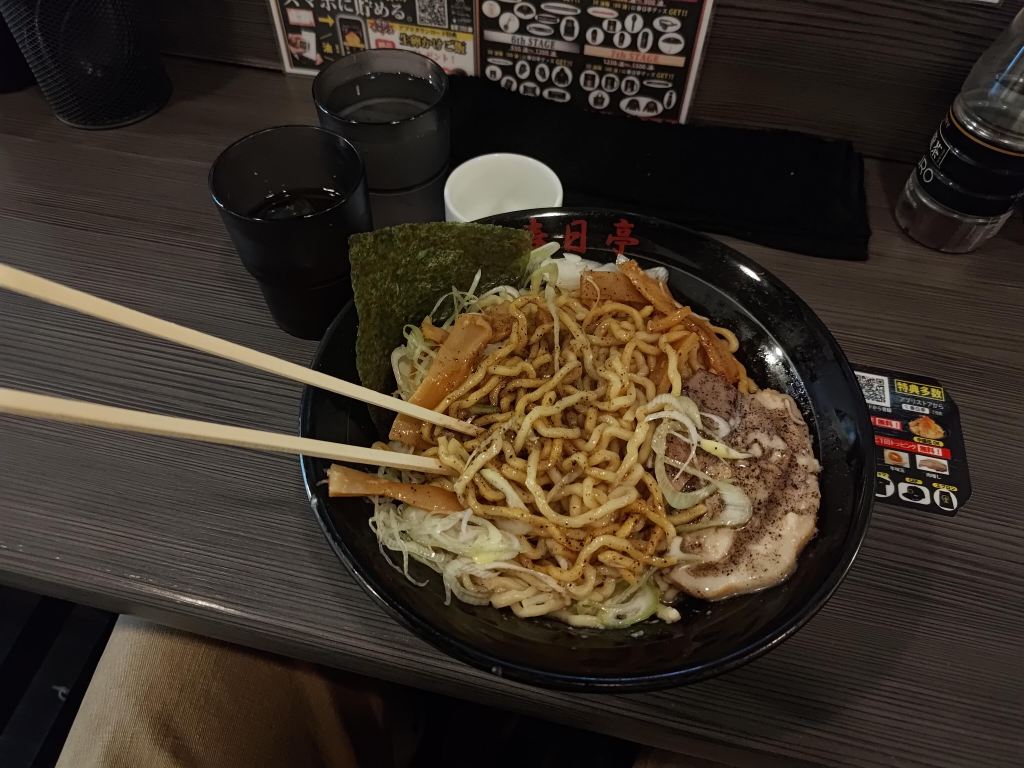
After several hours of walking around I needed some food – and Matt, another person at my hostel, had joined me to explore. We found a local dry ramen shop (no broth, just oil on the noodles) and got some food there.
It was great! Apparently it’s often had with mayonnaise, which I tried on about 1/8th of the remaining noodles – it was delicious!
After the noodles, we did a little more looking around, but we were both kind of tired from walking around at that point, so we headed back to the hostel.
Later in the evening, a group of several of us decided to check out a local karaoke place (apparently karaoke is HUGE in Japan) – the place just opened today, and was giving out 30% off coupons.
I guess I forgot to smile, oops!
After this and a few more hours of late-night chatting, I finally got to bed at 2:30 AM… 😛
Both of these days were sort of travel days so I have less content, and I decided to combine them into one post.
4/21: Last day in Malaysia
My flight out of Malaysia was at 12:10 AM, so I needed to leave for the airport around 8PM (an hour of travel to the airport + 3 hours to get through it). I also needed a solid nap before since I hadn’t gotten enough sleep the last few days, and it would be a 7-hour flight. So my plan for the day:
Get breakfast
Spend my remaining Malaysian cash at a local street market and take more photos
Nap
Go to the airport
After breakfast (which I forgot to take a photo of, but it was the same thing I got for dinner my first night in Malaysia), I started heading to the markets. However, when I pulled my camera out to take a photo, I realized it was dead. I’d forgotten to charge my spare batteries, so I instead walked to a nearby shop for some batteries. When I put them in, the camera . . . wouldn’t extend the lens!
The Olympus is dead, long live the Olympus!
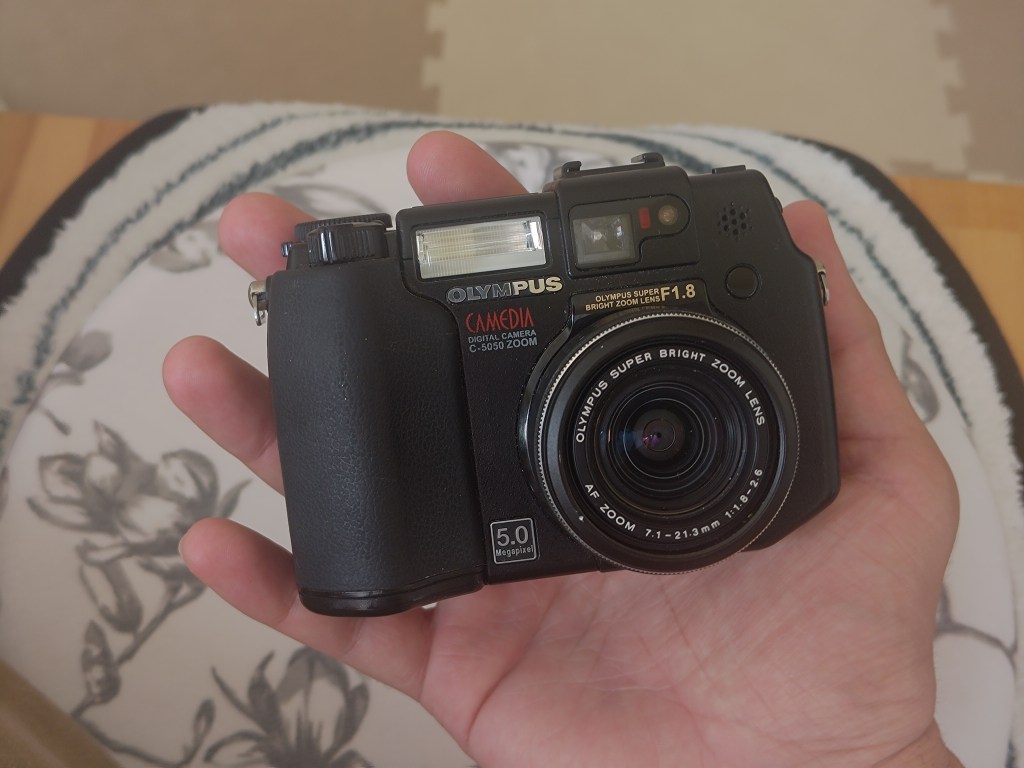
I paid $5 for this camera at Goodwill in July last year, and despite it being grimy, after some cleanup it worked great. It’s since become one of my favorite cameras, being covered in manual controls, with a flip-out screen, and enough resolution to take pretty decent photos for web use (5MP). Later in the summer, I was using it on the beach and it got splashed in a sandy wave as I was trying to take a closeup photo of waves (my fault). It stopped working for a bit after that, but then started working again! The lens made a grinding noise each time I would open it, but it kept working! So I brought it on this trip, having used it for hundreds of photos since then.
Sadly, it finally seems to have given up the ghost 😦
Oh well, for $5 and probably over a thousand photos, I can’t complain! A replacement of the same model will cost around $30 if I find a nice example on eBay.
Of course, I have my phone for photos – but I really prefer a camera with a proper lens, even if it’s from 2003. So now my plan was:
Get breakfast
Spend my remaining Malaysian cash at a local street market and take more photosGo find a used camera for less than $50
Nap
Go to the airport
So, I spent the next hour and a half walking sweatily from camera store to camera store, hoping to find something of around the same era for about $50…
This store clearly used to be a photo store, but isn’t anymore. There were a surprising number of camera/film stores, though!
And didn’t find anything! The camera stores either only sold new cameras, only had film cameras, or had a small selection of too-new, too-expensive cameras.
Luckily, the next place I was headed was Tokyo – the perfect place to find a deal on an older digital camera, so I held out for a day and just used my phone.
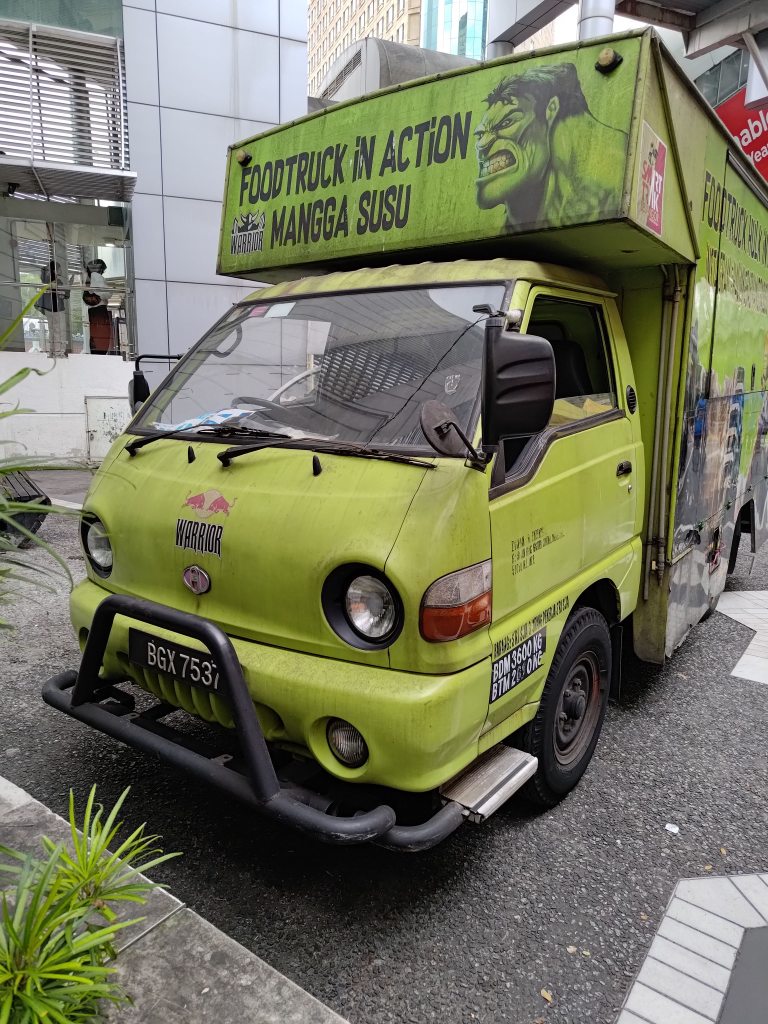
Of course, I found more interesting vehicles – a nice example of one of the more popular moped models, a neat van, and a small (for the US) delivery truck painted to look like The Incredible Hulk.
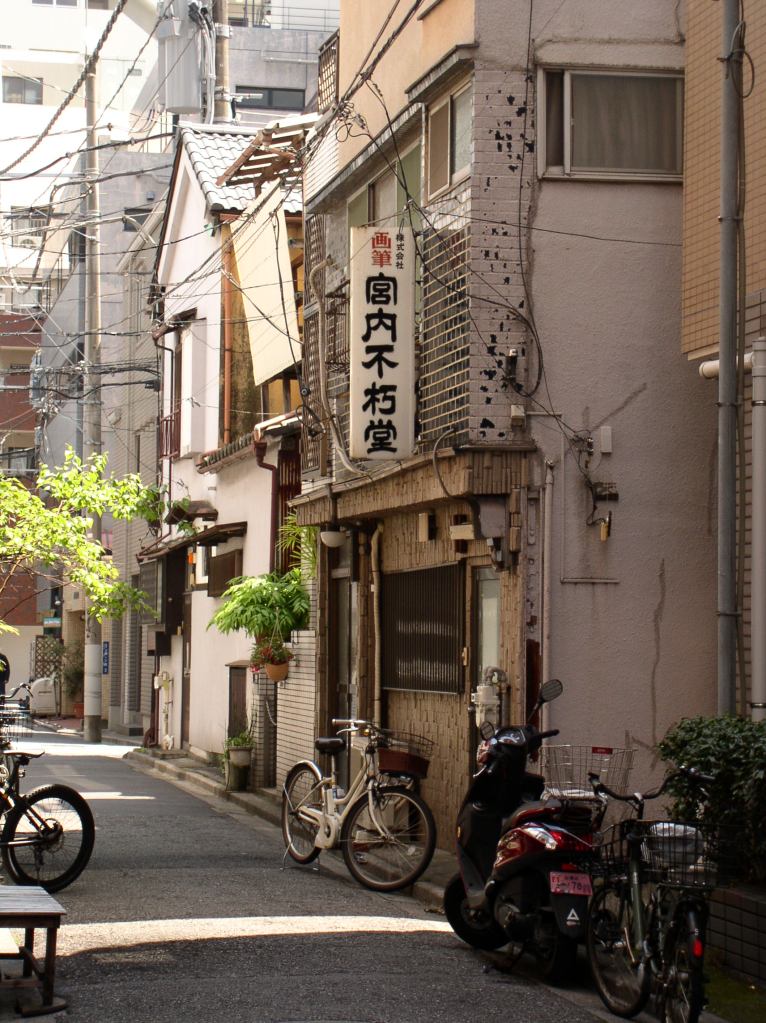
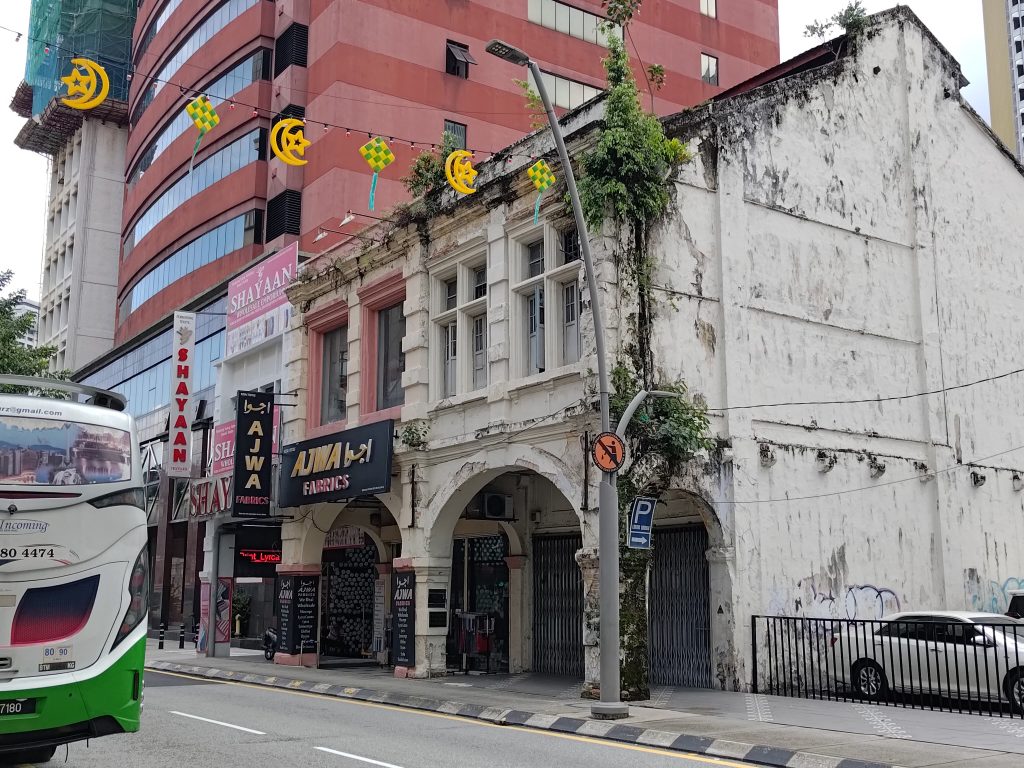
As I walked, I also took more photos of the streets – in this area, bustling with shops and market activity.
Then, I went back for my nap. Malaysia was really cool, and I knew Japan would be too, but being sleep deprived (and less excited about how expensive Japan would be), I was having a hard time looking forward to the next leg of my trip – I would really have rather gone home.
Traveling has been really fun, and I’m glad I’m here, but it’s been hard, too. I really like having a place I’m completely comfortable in to retreat to when I need a break, and obviously when you’re traveling (and mostly in shared dorm rooms), that’s not very possible. Add that to changing cities and countries every few days, a new language that you don’t know, new cultures you have to think about, and having to figure out where to eat for every single meal every single day, and it gets pretty exhausting.
(As I’m writing this, I feel better – I still wish I could go home sooner, but that would be prohibitively expensive, and I recognize a lot of my feeling like this comes from having been behind on sleep. I’ll be at this hostel for 6 days, I just slept for 16 hours, and there are grocery stores nearby at which to get food for breakfast and any other meal I don’t want to go to a restaurant for – I’ll probably take the next few days a little easier, then feel more ready to explore Japan.)
Anyway! Post nap, I packed and headed back to the airport.
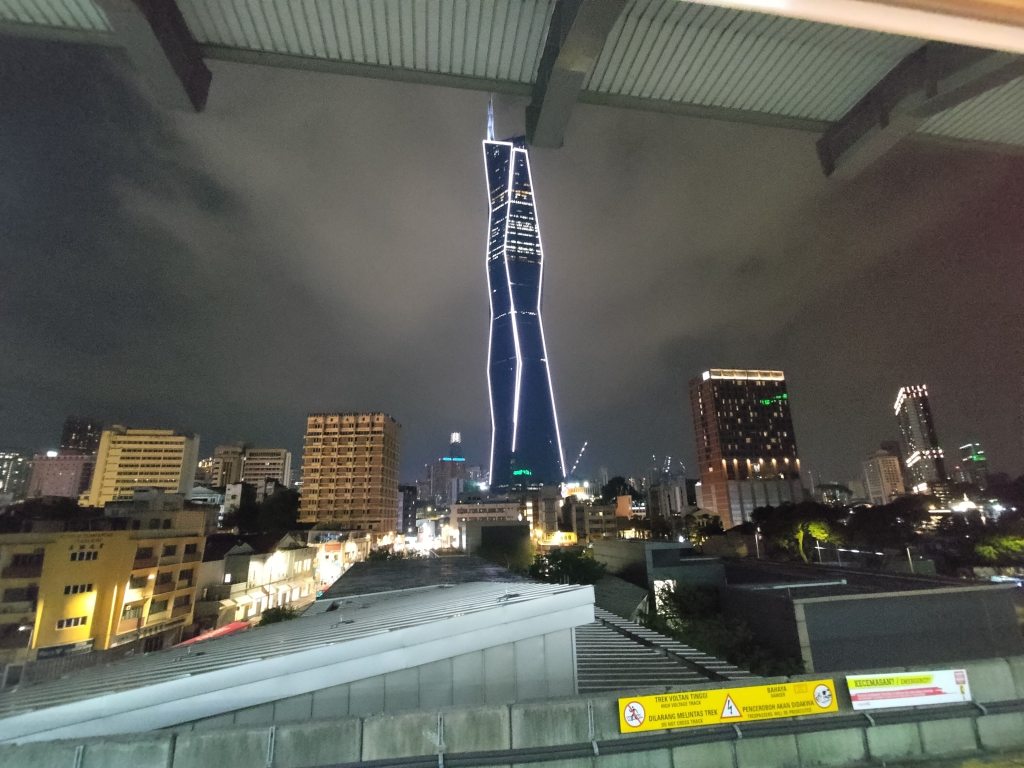
The tower near my hostel had lights along the sides that I hadn’t realized were there during the day! The street market was busier than ever, and I think I didn’t really see as much as Malaysia had to offer – I will have to come back sometime for a more dedicated trip.
On my way out, I grabbed a couple of “thousand layer patties” (little warm pastries which have chicken or beef stuffed in them) from a street shop for dinner. At the airport, I ate these alongside a Dunkin Donuts iced latte before boarding.
This plane was much more like a normal American flight, without screens, free food, or fancy seats. It did have more legroom than normal, though! I slept for most of the flight.
4/22: Camera hunting in Toyko!
The next morning around 8:30AM local time, I landed at Narita International Airport, about 65km from Toyko. Here, I charged my phone, got some cash (cards are less commonly accepted in Japan, apparently), and ate some breakfast at the airport before buying a train ticket into Toyko.
Check-in time at the hostel wasn’t till 5PM, so I headed first to Shinjuku Station, around which there are a lot of camera stores with both new and used gear.
The first few stores I stopped at I felt too poor to walk into – lots of expensive cameras (the cheapest were around $500 USD), pretty but far outside my budget (and not what I wanted, anyway). However, the third one I walked into had an “as-is” shelf, and on that shelf, an Olympus C4100! After testing it, I paid 3500 Yen ($24.50 USD) for the camera and two memory cards (it takes a different kind than my current one does).
This one is slightly older (2002 vs 2003) and a little lower quality, with 4MP instead of 5, no flip-out screen, and a slightly less nice lens. Fundamentally though, it is a very similar camera.
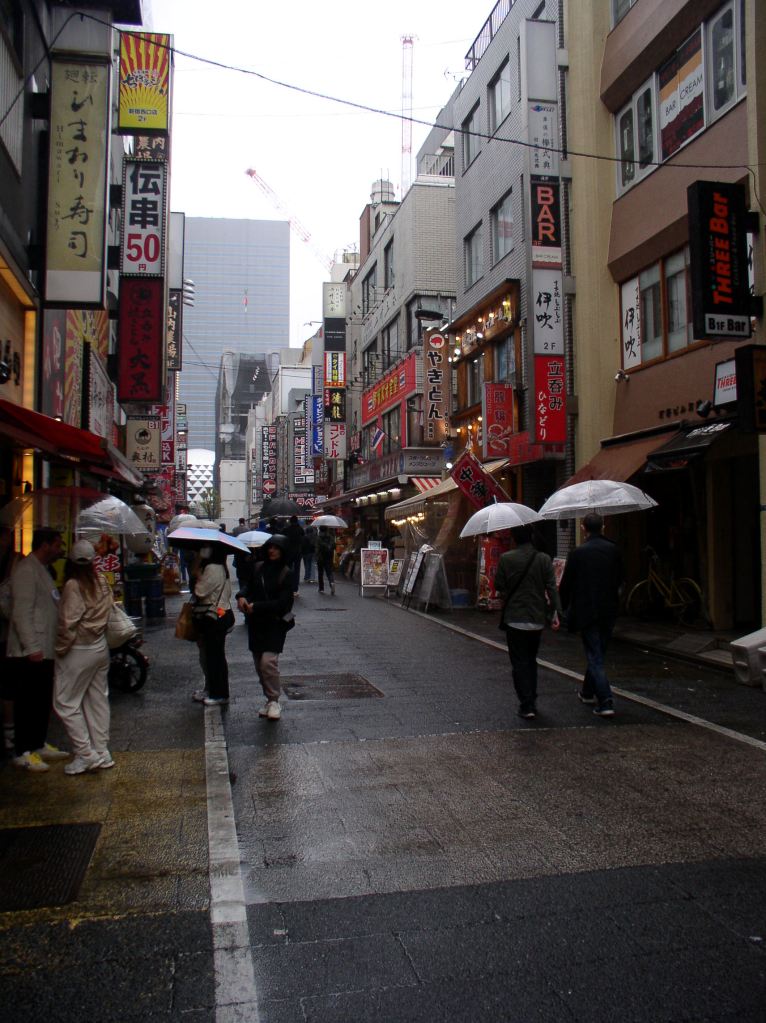
Glad to have found a replacement camera, I headed back out and took a few photos. It was a rainy grey day (much like Oregon!) and it made the streets wet and the bright signs pop against the grey buildings and skies.
Olympus C4100
I’m pretty happy with this camera! Straight out of the camera the images have a lot of color, though I can tell the dynamic range is worse (I had to do more minor adjustments to these images in order to bring the bright areas down and the dark areas up than I normally would do for the other camera).
I’ve seen a few of these not-quite-motorcycle, not-quite-car things around.
There were a few more camera shops to stop by, so of course I did. What, just because I found a camera doesn’t mean I won’t look at more!
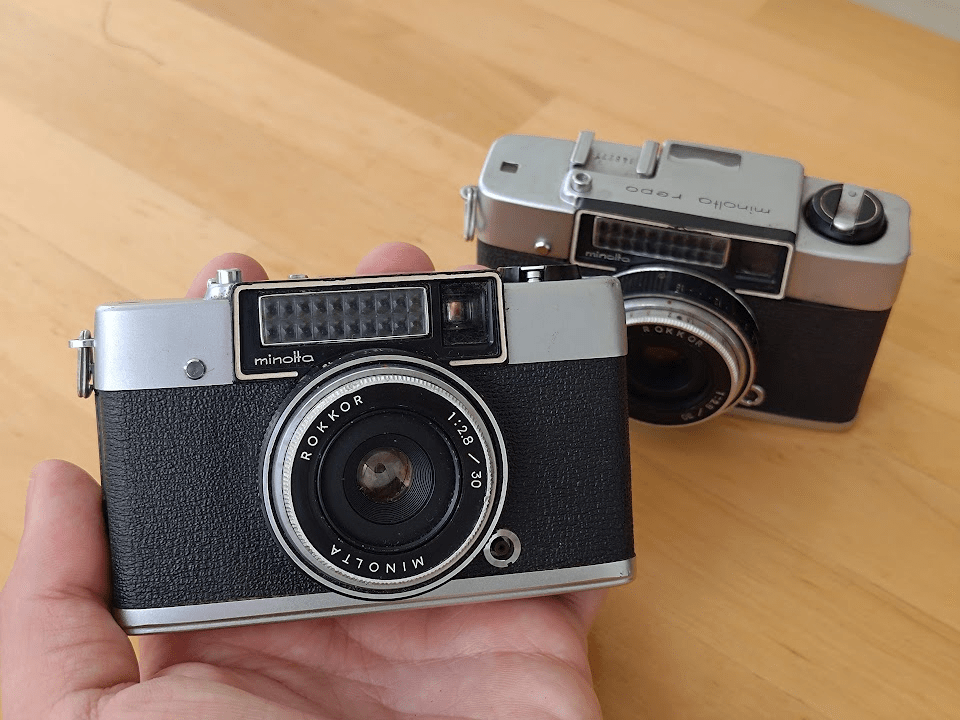
I forgot to take pictures of the last camera store I went to, but it would have been a perfect place if I hadn’t already found a good camera. It was a small shop, crammed floor to ceiling with antique to (somewhat) modern cameras, mostly film, but with a good mix of digital in there too. There were a lot of cameras sold non-working, most for only a couple thousand yen ($10-30 USD). Of course they had working cameras too, also for what seemed to be good prices (under 20,000 yen in a lot of cases, or USD $140). I may have bought two parts cameras of the same model, in the hopes of combining them into one working camera… They were only $30 together!
I love how small these are! With digital cameras it’s not so surprising, but there’s only so small you can get with 35MM film. The cute factor was part of why these were so irresistible.
These are half-frame cameras, meaning they shoot two photos per one film frame (by using only half of the frame each time). This effectively halves the resolution of the photo which does decrease the quality, but means you can get either 48 or 74 shots depending on what type of film you use! With the cost of film, this is definitely a benefit.
They’re from around 1963 (62 years old!) and neither one works – the shutter doesn’t seem to properly close. I suspect (after watching a video on YouTube) that the shutter blades just need to be cleaned, but I’m not completely sure yet.
(To Felix and Katerina: I don’t think I’ll get the chance to rent a moped 😦 I believe the laws are a lot more restrictive in Japan, and in Italy and Malaysia it didn’t seem safe to do so. Someday I will go back to Barcelona, and I’ll be sure to rent one there! Instead, your moped money will go towards some nice sushi!)
All for now! Let’s hope my spare luggage space survives the next few days – no more camera shops!
The view from my AirBNB was fantastic – I was up on the 9th floor of a high-rise building built up on a hill overlooking the Rhône river, which flows from the Alps down to the Mediterranean Sea.
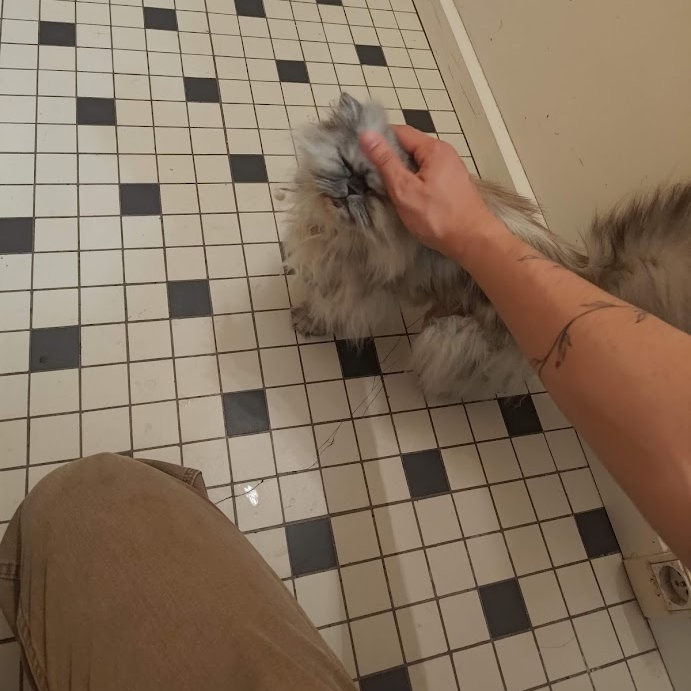
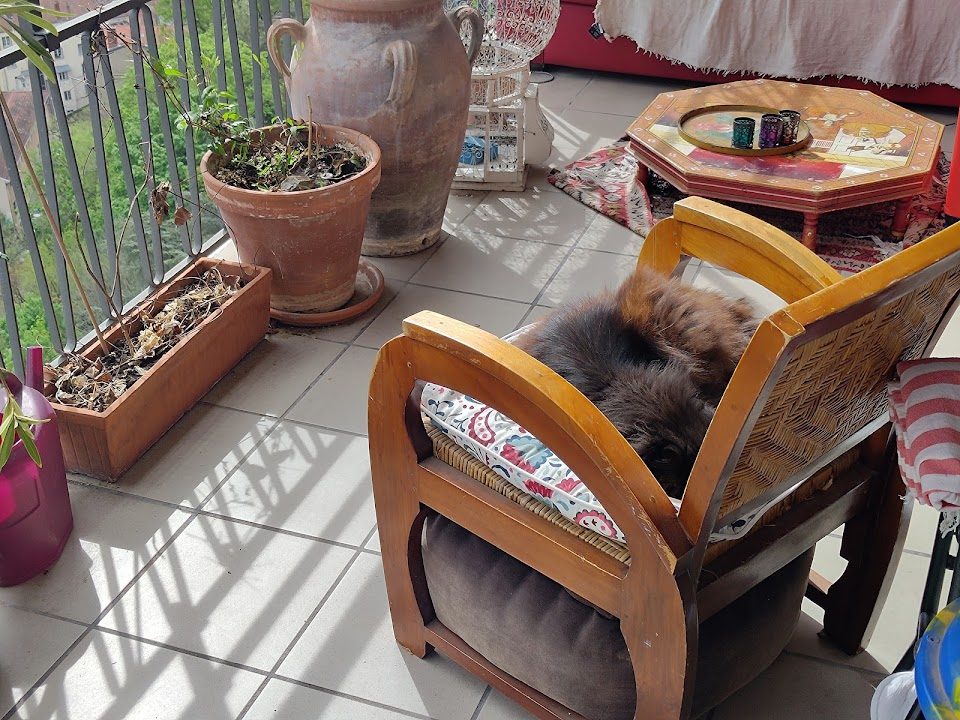
My AirBNB also had two persian cats, who were both very friendly.
Every time I came back to the AirBNB at night, the white one would follow me around meowing – I think all she wanted were pets, since when I did pet her for a few minutes, she stopped meowing (and she had food and water).
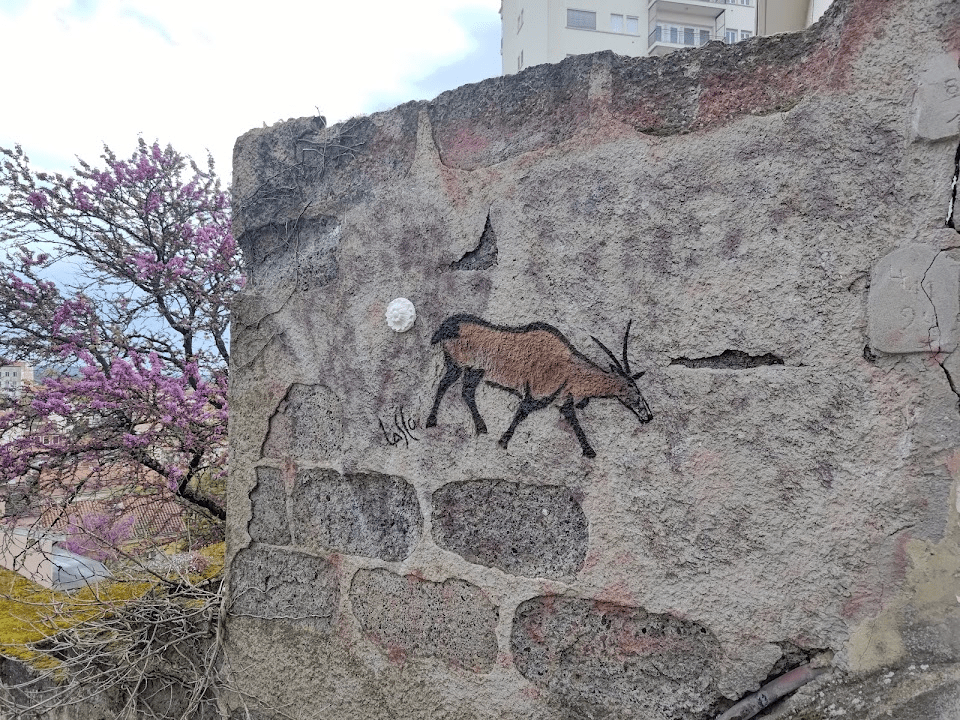
This definitely isn’t as old as real cave art – but was a remarkably good recreation as grafitti near my AirBNB.
Breakfast today was fast – a cappuchino and a chocolate (not actually a croissant, but that’s what we call it in the US).
Nearby the cafe, there was a street market selling CDs, Records, Posters, and books/comics.
Tintin was popular here – but that makes sense, Tintin is from Belgium, not far away.OLYMPUS DIGITAL CAMERA
Afte this, I went to a cute antique sovinour store and picked up a couple of trinkets for friends back home. They had vintage postcards from Lyon – much cooler in my opinion than most new ones (if less usable as postcards because of already being used :P)
Next up was the Musée Cinéma et Miniature – a museum in Lyon with several floors of props used in movies (a lot of which I recognized!) and then one floor of little miniature scenes crafted by artists of the museum.
My camera does not do well in low light, and most of the museum was darkly lit. Most of the props look better in the movies anyway. However, I did see some from movies I enjoy a lot, particularly from Wes Anderson’s films – there was a whole room dedicated to his work, with props from the Grand Budapest, Isle of Dogs, Astroid City, and others.
In an adjacent room was a short film showing some behind-the-scenes looks at how Astroid City was filmed and the props it involved. I really enjoyed seeing this – Anderson’s team creates a 3D model of most of the world the film is set in, and then builds as needed at different scales. The train from Astroid City was about 1/10th the real life size, for example. Of course things that humans interact with, like the diner, are real size.
After a few other stops including a (currently non-functioning) animatronic from Alien, I headed up to the miniatures floor.
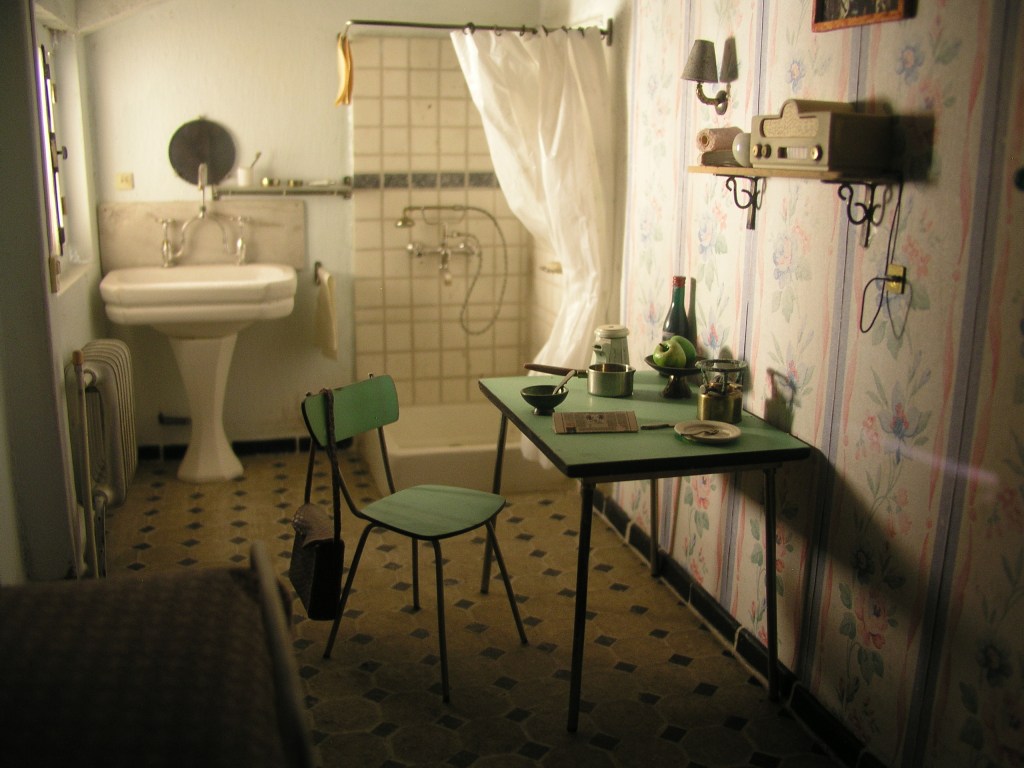
This whole scene, titled Apartment of the 80’s (translated from French), was about 1x1x2′ width x height x depth. These chairs are about 1.5″ tall!
This was honestly the more interesting part of the museum for me – a lot of the movie props were kind of gross looking and were much better in the movies…
I wish this place existed full size!
But the miniatures! I had to stop myself from taking a picture of EVERY single one.
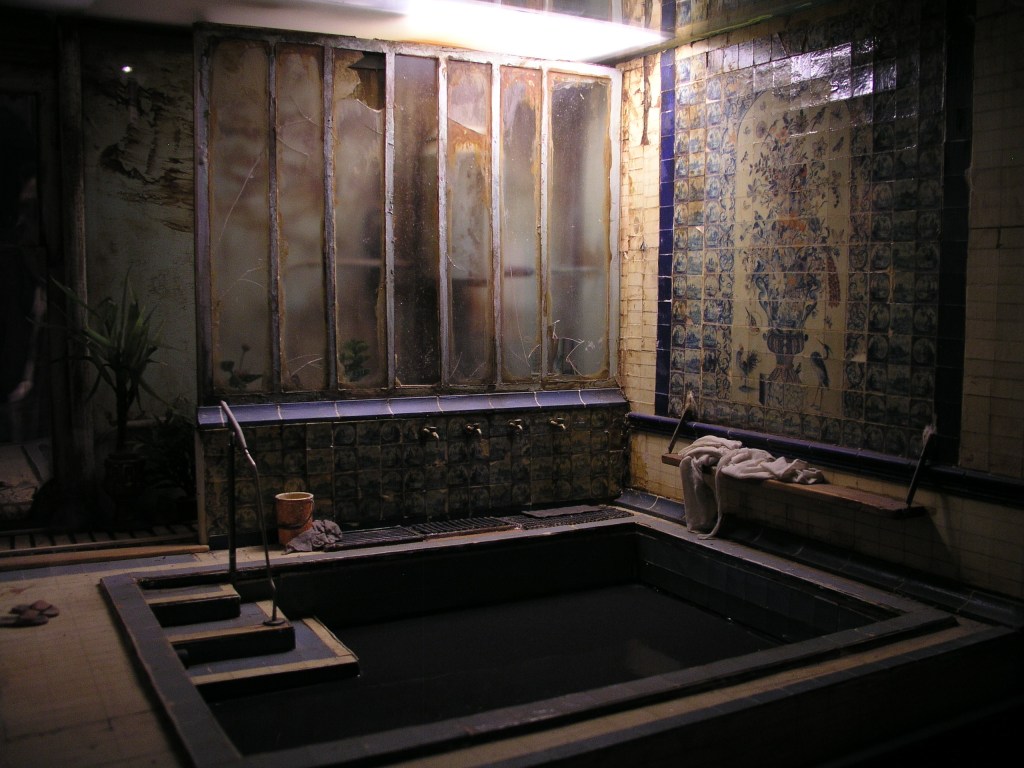
Some of the scenes were just still lifeSome looked out of a dungeons and dragons world…Others from an older time…Or a long-forgotten space.
After the museum, I slowly meandered back to my AirBNB on foot, and took more photos along the way.
This is the closest to a Cybertruck they have in Lyon. Good thing – it would not fit on the roads here.
Sorry for the long delay between posts! I’ve been remarkably busy since leaving Lyon. Amsterdam is great – I’ve rented a bike to explore the city, three days only cost 21 euro!
More posts to come – I’m sitting at a bakery hoping to write just a few more before I continue exploring 🙂
While down in LA, I stopped by Apex Surplus, an recycling/surplus/movie prop store. They have a whole warehouse full of electronics, cool vintage and antique radios, computers, terminals, TVs, and more, plus a yard out back of scrap metal with pieces used to make the original Droids in Star Wars, technology that inspired the displays in Star Trek, and more – Basically, my dream place to spend a few hours.
Most of these computers are rental-only, for filmmakers to use as props for TV shows and movies. There are some truly old pieces of computing history here!
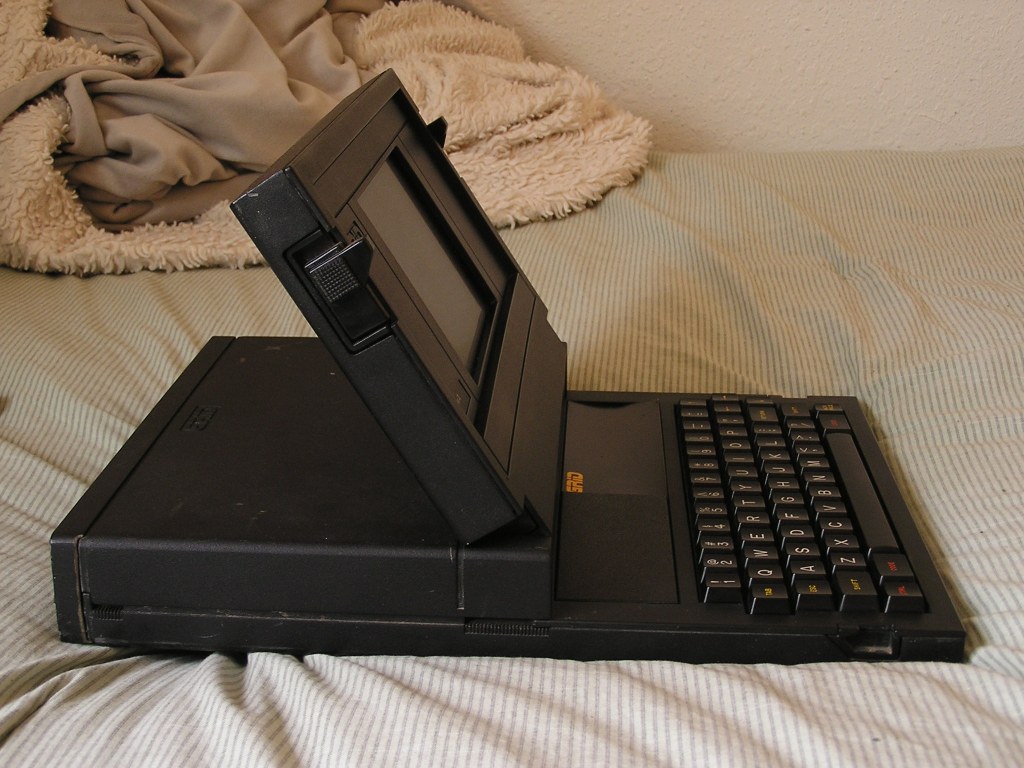
Aside from befriending Steve, a once-Oregonian synth enthusiast employee who lived in Sweden for 10 years and showed me around Apex, I also happened upon a nondescript black metal laptop tucked away among other old computers…
The GRiD Compass II was a “Clamshell Portable” computer (some call it a laptop, but I think the lack of built-in battery makes it more of a portable) manufactured in the Early 1980’s. Credited by some as the first ever laptop, the GRiD Compass certainly inspired future generations of laptops, as it was one of the first laptop-shaped computers available. It was designed specifically to be extra rugged, with an all-metal case, “bubble” memory instead of a hard drive, and expandable ROM slots for storage instead of an internal floppy drive. This made it especially expensive (over $24,000 once adjusted for inflation!), but that didn’t matter to the target buyer.
Where would you need to use a state-of-the art portable computer that can withstand radiation, extreme temperatures, and heavy vibrational forces? In space, of course!
John Creighton with a GRiD Compass on the Space Shuttle Discovery in 1985.
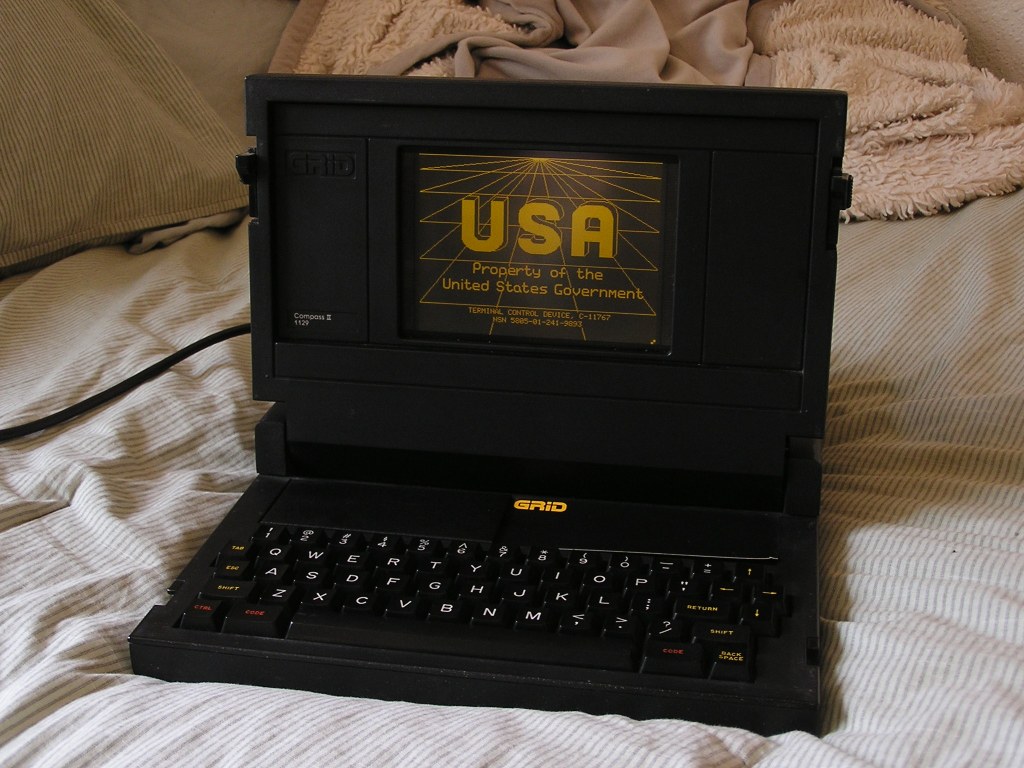
Yup! The GRiD Compass was bought by NASA, among other government agencies. Mine unfortunately wasn’t a NASA computer, but it clearly belonged to some government branch, according to the splash screen when it boots up.
The special ELD display is crisp and very retro. It uses a similar technology to neon signs! LCDs, used in most laptops today, were not widespread or robust when the GRiD was developed.
Mine wasn’t working when I bought it, it only displayed an “CCOS Not found” message. However, re-seating the ROM chips that store the operating system worked fine, and after (probably about 40 years!) it booted right up to a login screen.
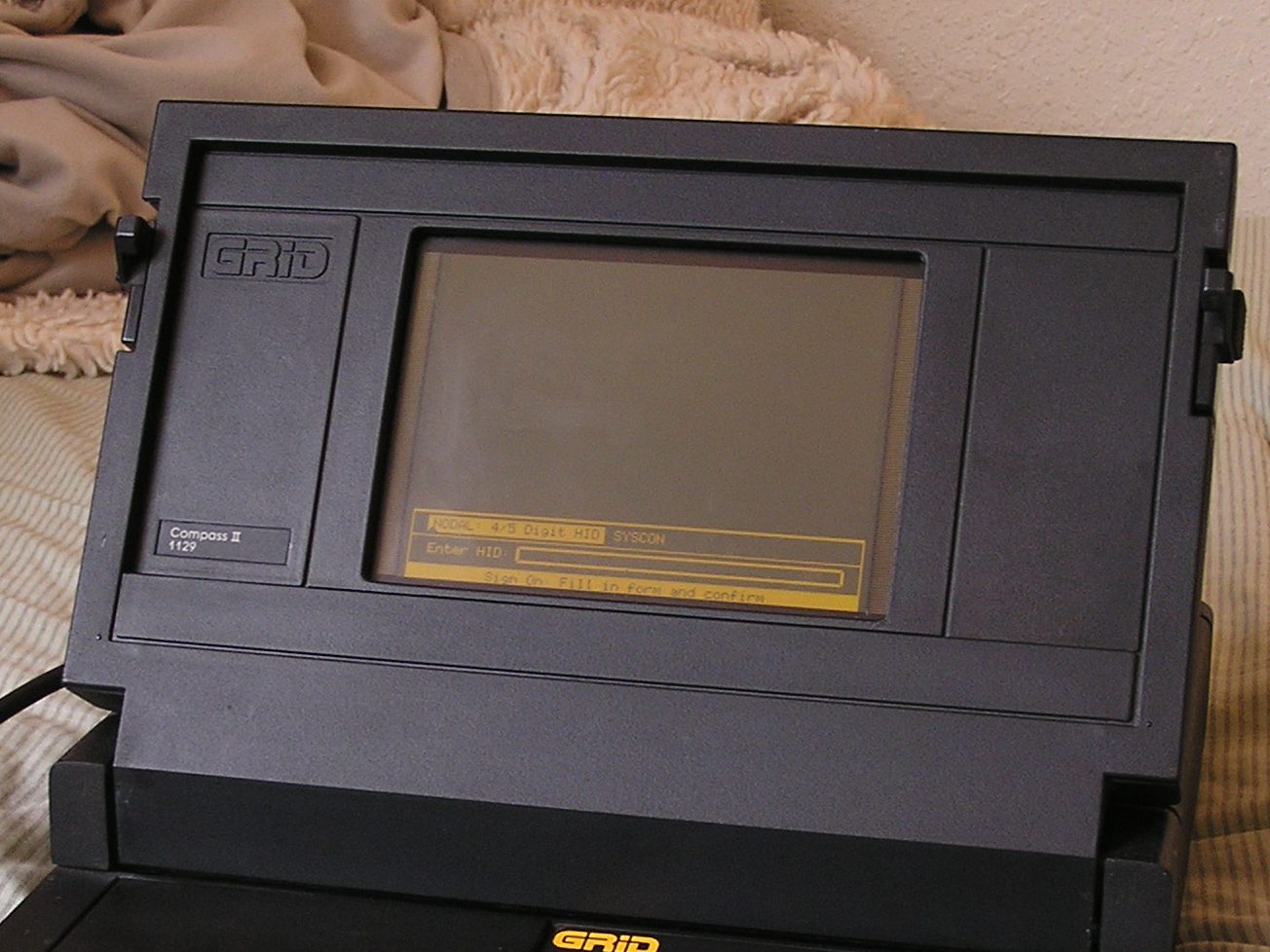
The login screen. The SYSCON option seems to require an external floppy drive to be connected.
With some lucky guessing, I figured out the password (it was the 5-digit terminal number on the splash screen) and started fiddling around with it. Nothing interesting has presented itself – most of the files on the computer are password protected (no surprise) and the programs are an email client (yes, from 1984!), a printing program, a table editor (not sure what type of table), and a file manager.
The simple graphical UI presented once you log in.
They’re all accessed through a simple graphical interface which can be navigated via the keyboard. My best guess is that this was intended to be a portable terminal to log into a government computer network of some kind (probably via phone lines, it has a phone-line modem on the back and a program for receiving and sending files via phone), but what it was used for, I can’t determine.
Ports aside from power include an unusual Serial connector, a telephone modem for network connection, and the “GPIB” connector (I think this is a parallel port, essentially) for hard drive, floppy drive, and printer connections.
Everything seems to be locked down via a custom OS (probably a program that runs at boot and doesn’t allow access to the normal GRiDOS or GRiD-DOS environment), and so far I can’t figure out if there’s a way to exit it.
GRiDWrite seems to be developed by GRiD, but for this custom version of the OS, is used only for composing and viewing emails.
At some point, I want to try to restore this to the normal operating system that would have shipped with these, after backing up the contents of the bubble memory (where the custom OS is likely stored) somehow. Very little seems to be known about these systems though, so that will be a project for later.
This should be my last post before actual travel content! I fly to Boston on Wednesday, so once I get my GRiD Compass enthusiasm out of my system, I’ll be in full-blown packing mode.








































































 jacobblogs