I’ve been into “vintage” digital cameras for a while (vintage meaning roughly pre-2008, at least for most electronics). This is the camera that sparked my interest in the first place: a Sony Mavica FD75 that I found for $15 at a local thrift store.
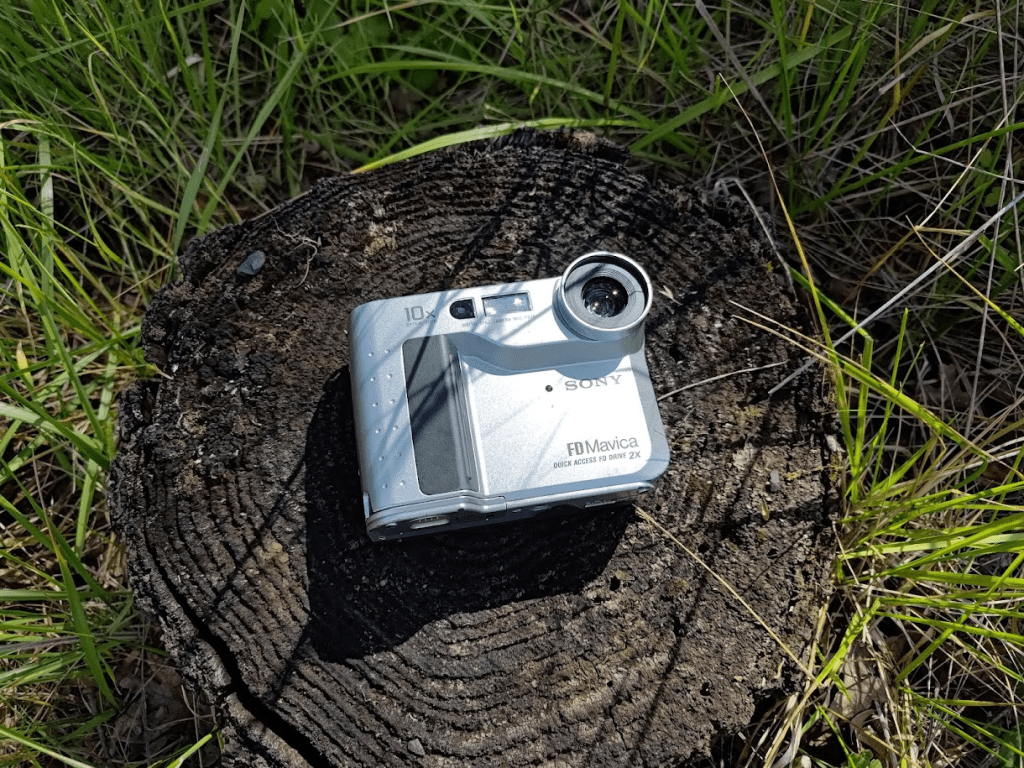
From 2001, this oddly-shaped camera is a product of the early era of digital cameras, when the much-smaller digital sensors (compared to film) meant designers could experiment with new form factors – in this case, putting the lens/sensor in the top corner of the camera body.
The unique thing about this camera though isn’t how it looks – it’s how it stores photos. This camera has a floppy drive built in, and it takes regular old 3.5″ floppy disks. This seems odd, but was actually a really good move for Sony. Flash memory was expensive and new, and required dedicated readers, which made the already high barrier to digital photography higher. But almost everyone had a floppy drive on their home computer, and dozens of floppy disks lying around.
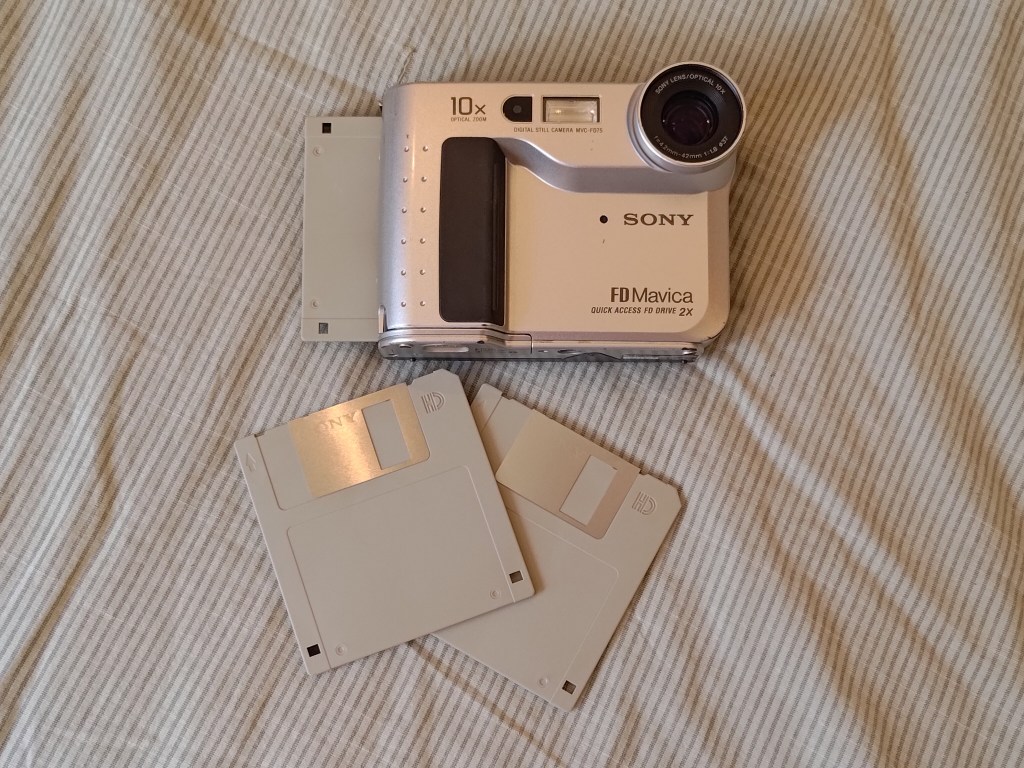
Each floppy disk holds 1.44MB of data, which translates to about 17 photos in the high-quality setting, probably about 20-24 in normal quality – pretty comparable to film, which held about 24-36 shots per roll.
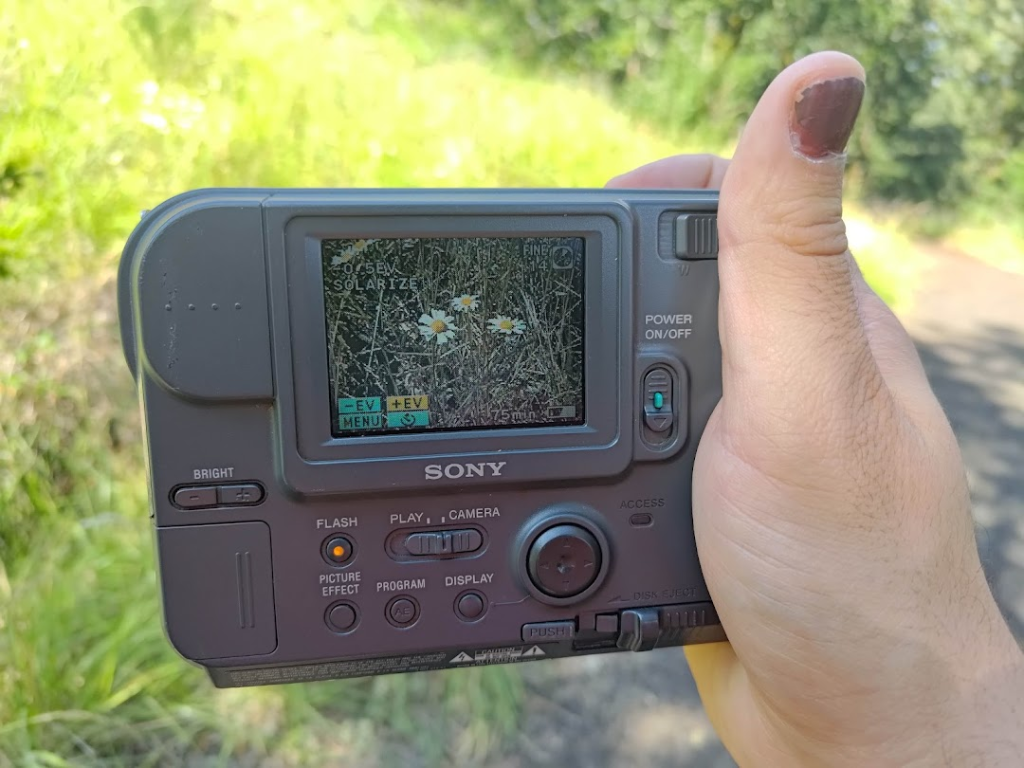
I like using this camera a lot – it has fun little sounds, lots of buttons on the back, and it feels tactile to use in a way shooting with a smartphone doesn’t. The bloops and beeps it makes (characteristic of these early 2000’s Sony cameras) makes taking pictures almost feel like a game. Each picture takes a few seconds to save, accompanied by a little animation on-screen while the internal drive grinds and clunks as it writes the data.
So – how do the photos look? Well, to cut down on cost, they used a sensor that only supports a resolution of 640×480 pixels. To be fair, that’s standard resolution, and most computer monitors’ maximum back in 2001. Nowadays though, they look pretty pixelated.

Depending on what size screen you’re looking at these on, they might actually look fine – especially if you’re viewing this page on a smartphone.


The camera has a couple of picture modes – the photo above was taken in “Solarize” – which simplifies the color palette to fewer colors, like computers from the 80’s and early 90’s sometimes were.

Despite the tiny sensor size and minimal dynamic range, I managed to get some decent photos.

The 10x optical zoom makes this camera a lot more versatile than it otherwise would be, and it’s surprisingly decent at focusing.

This photo was taken at 10x zoom. It’s hard sometimes to tell if it didn’t focus, or if the photo is just so low-quality that it’s that blurry.

This photo shows something really interesting – notice the diamond shaped bokeh (the blurs of light in the background) – this indicates that the aperture in the lens (the hole that varies in size to let in more or less light) is a square shape (or diamond if you wish) – another cost-cutting measure. This would usually be pretty undesirable, but I really like the effect here. Portraits with this would be fun.

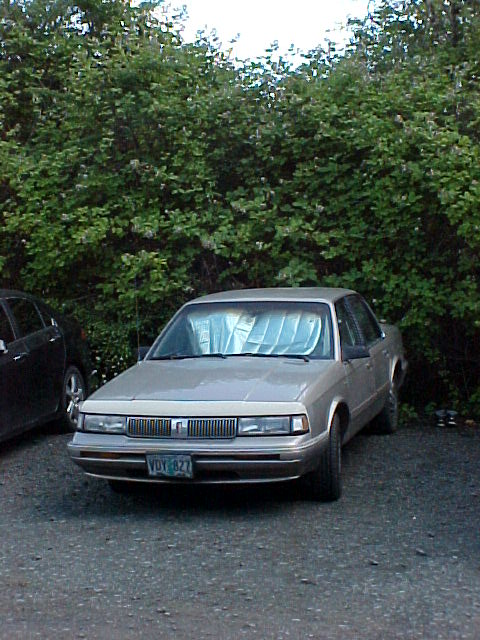


Believe it or not, this is actually not the worst digital camera I’ve used! That award would go to the GameBoy Camera. It isn’t even the second worst! That’s a tiny old Vivitar camera that was just awful.
All for now!
 jacobblogs
Leave a comment